Last updated November 21, 2026
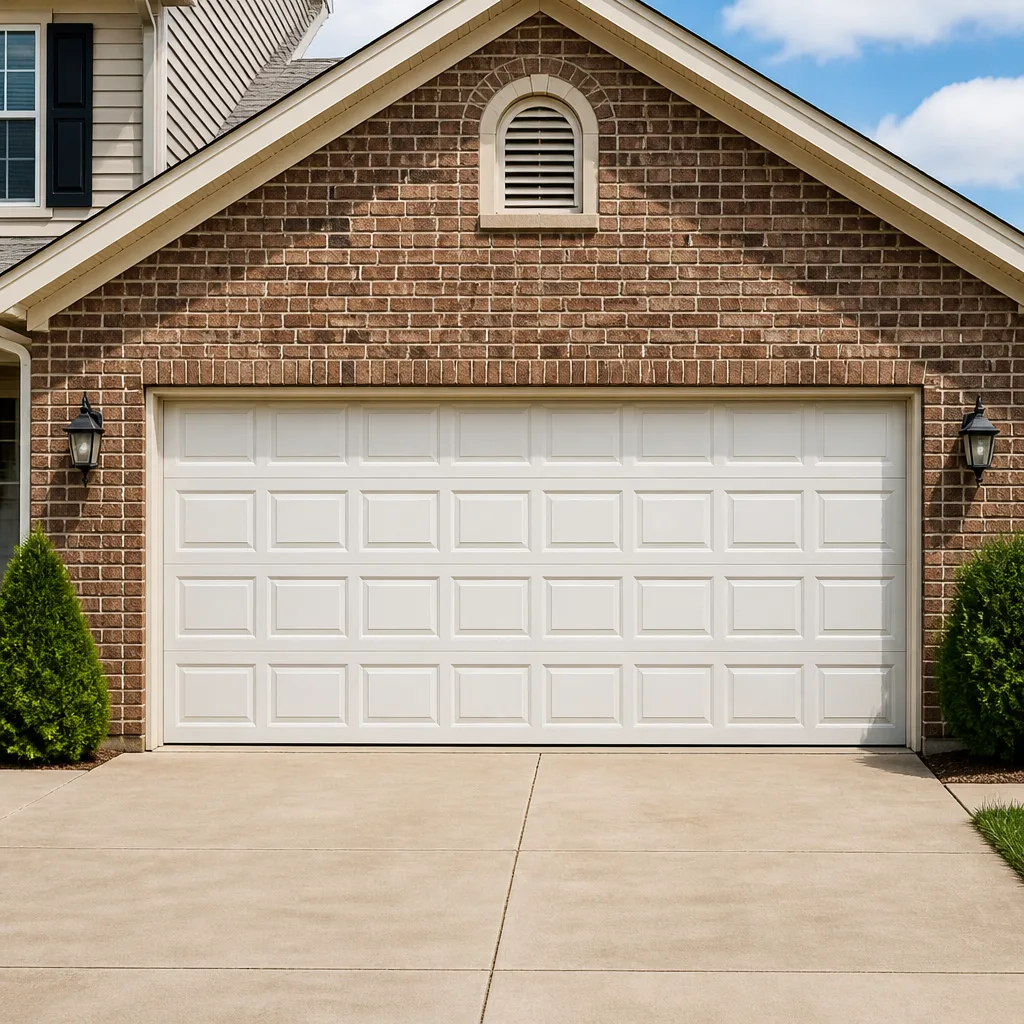 Raised-panel steel
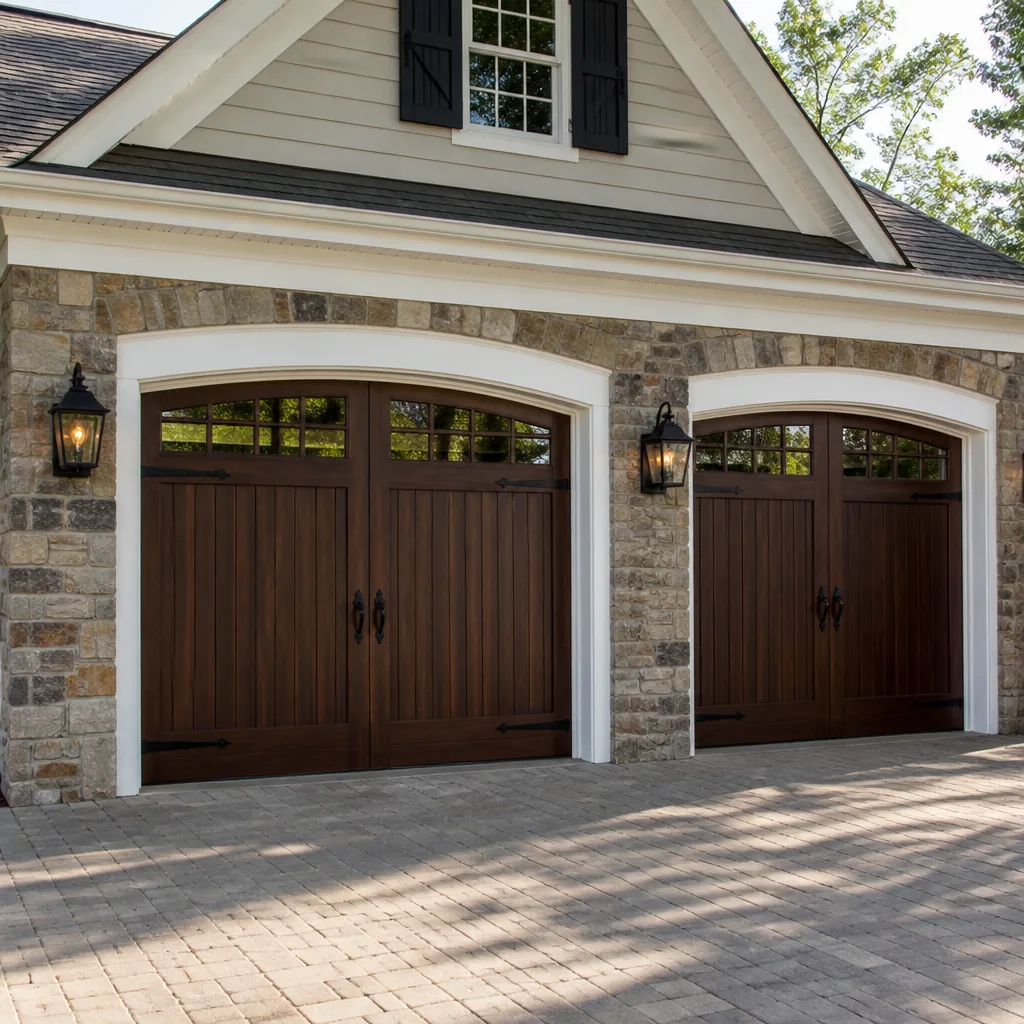 Carriage house
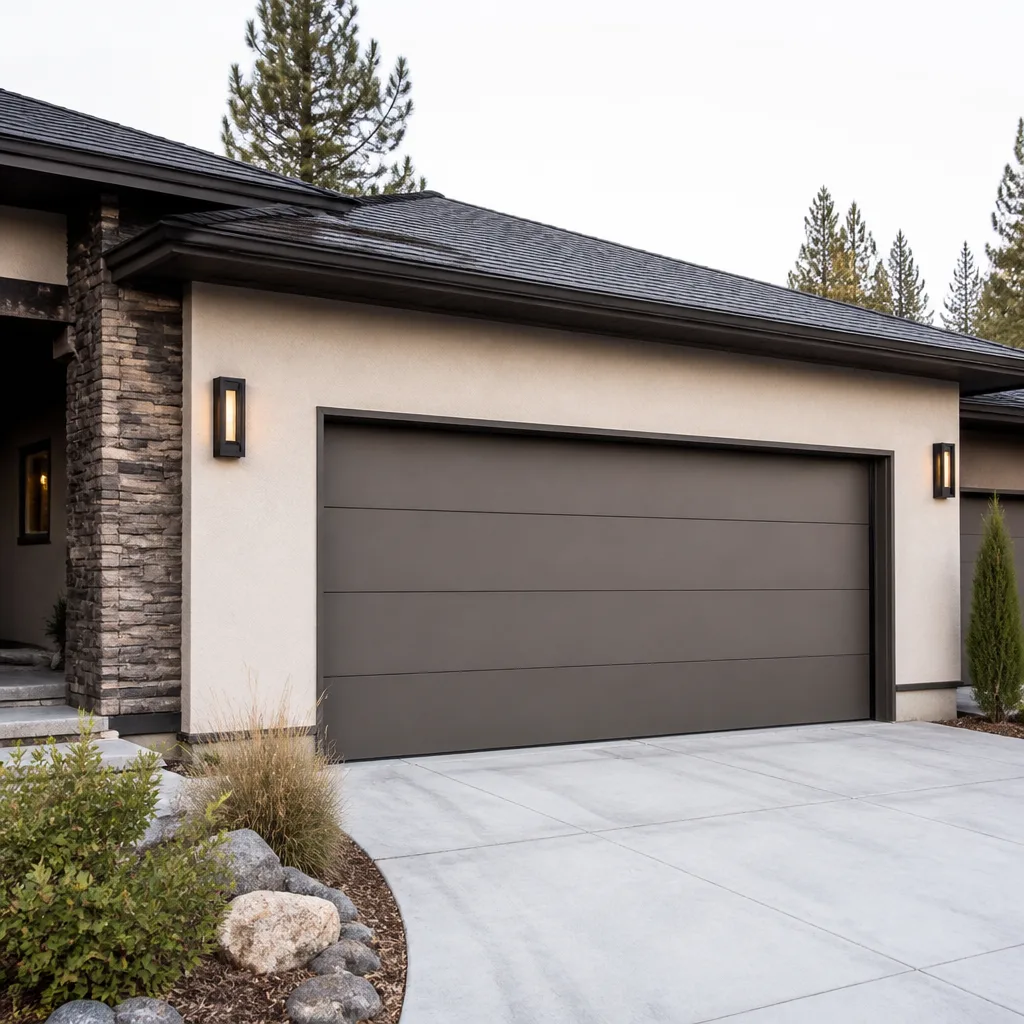 Modern flush
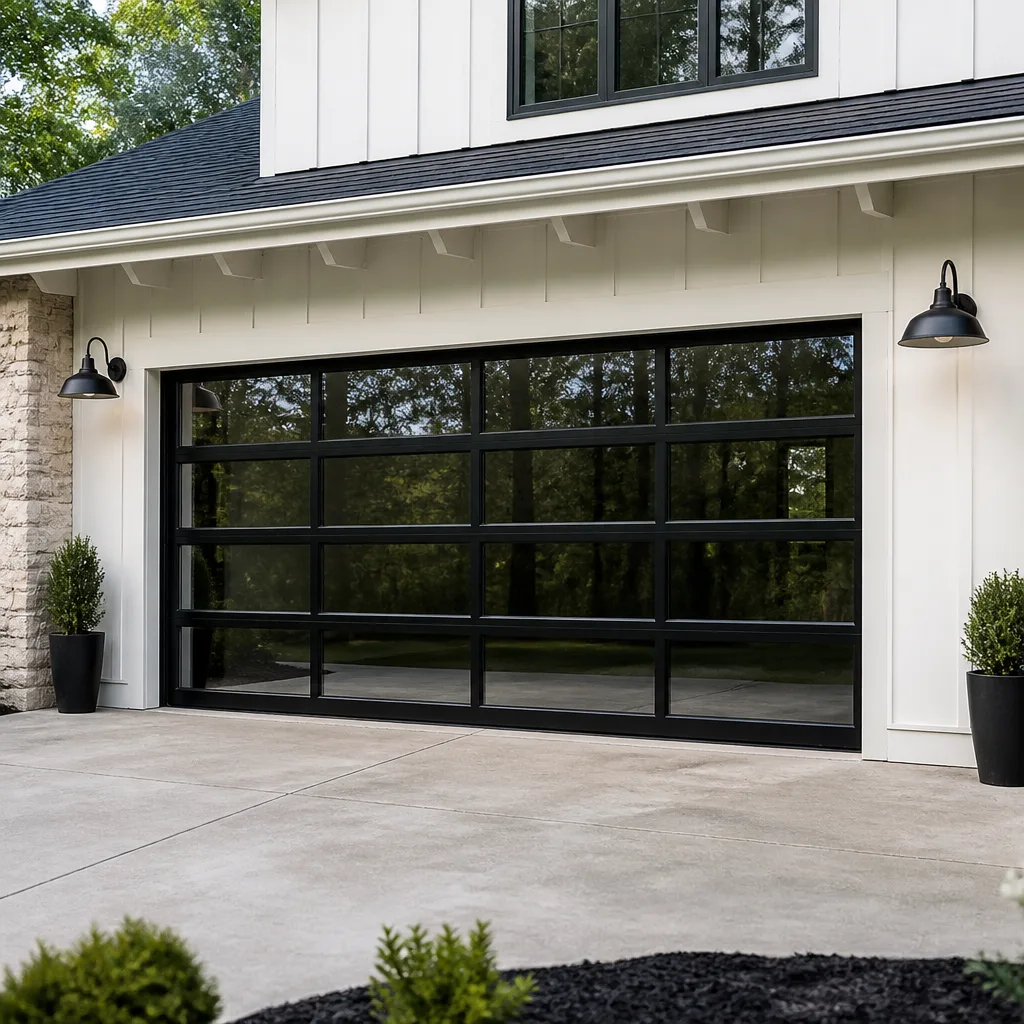 Full-view glass
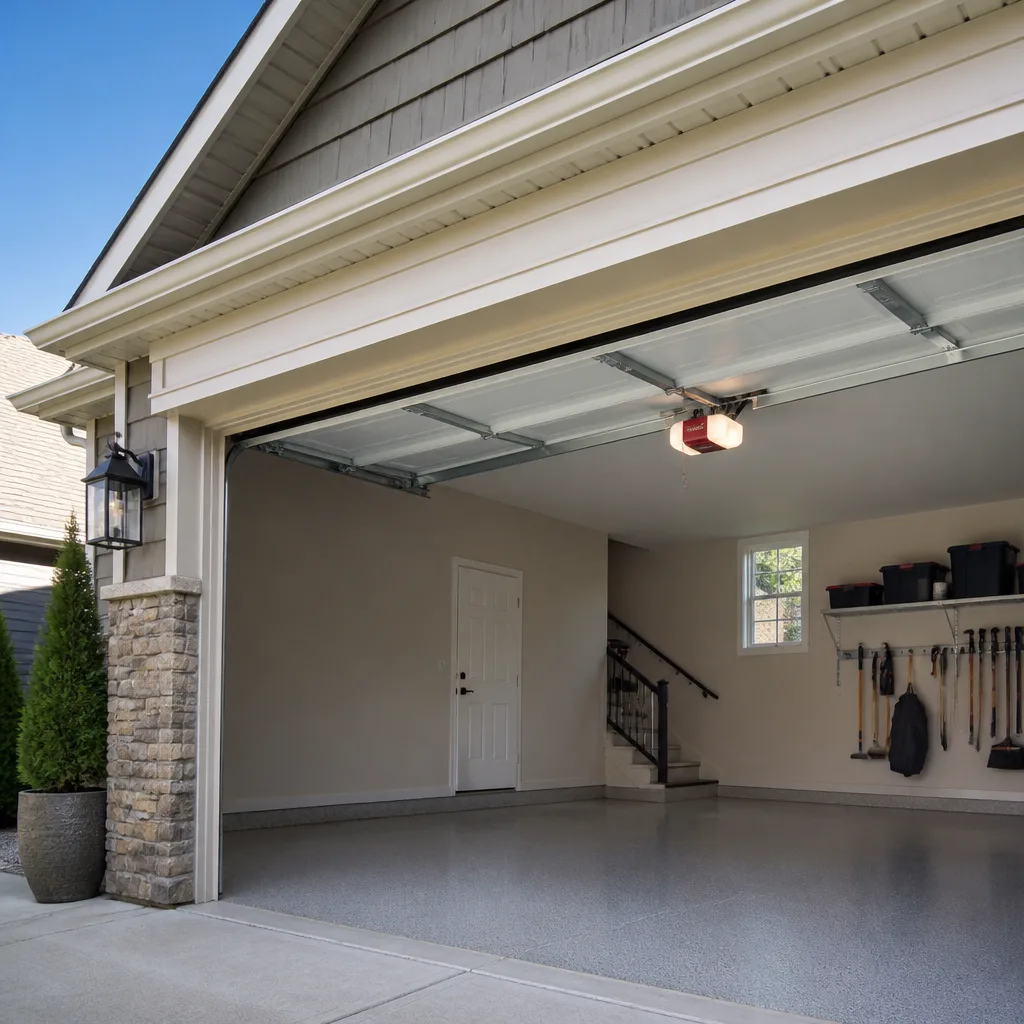 LiftMaster openers
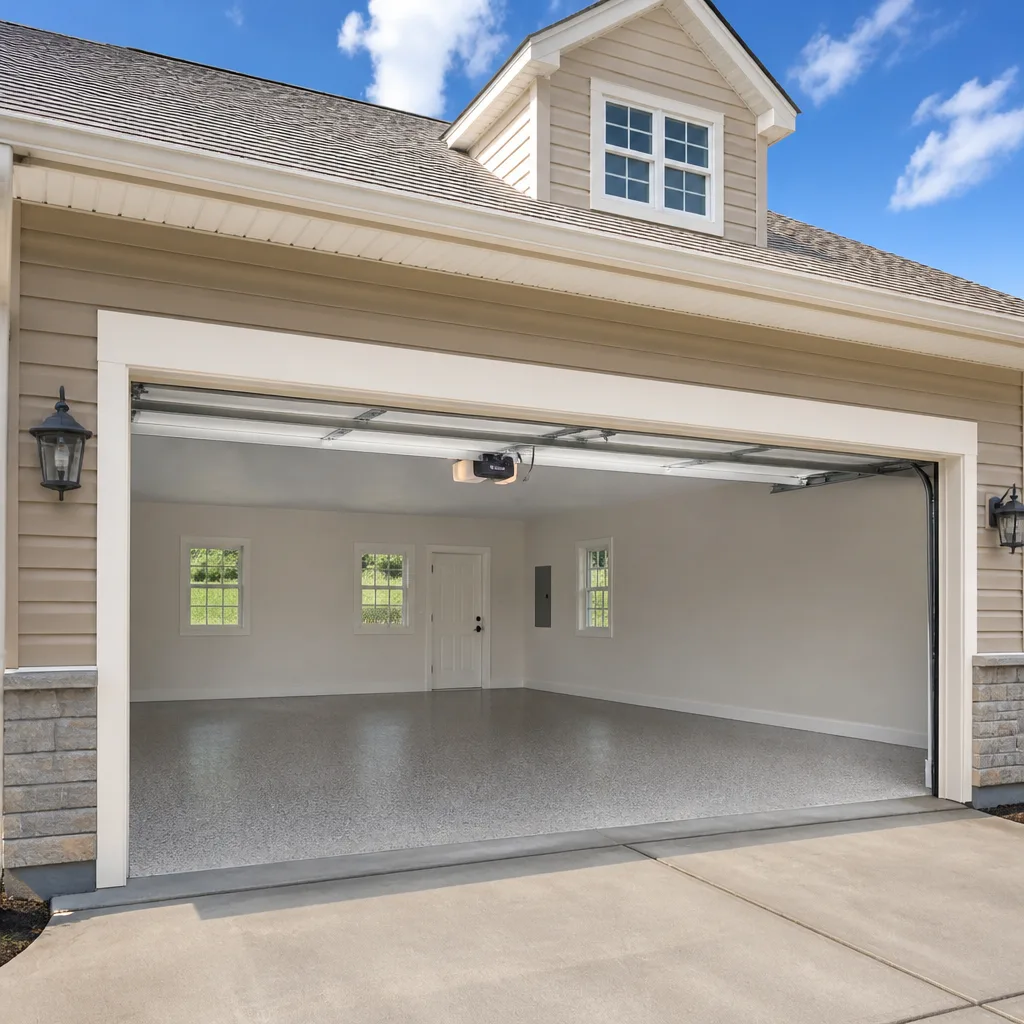 Chamberlain openers
Full 25-point door and opener safety check with every visit - springs, cables, rollers, tracks, and your LiftMaster or Chamberlain opener included
You get a price before we start. It does not change when the pro arrives.
Get your free estimateThe Complete Guide to Garage Doors in Parma
Most Parma homes were built before modern garage door sizing was standardized, which means the “standard” 16×7 door you see advertised may need a header modification before it ever goes up. That single fact changes how you should shop for a door, choose a spring system, and decide whether to repair or replace. Parma’s ranch homes, brick colonials, and cape cods each bring their own clearance, insulation, and fit challenges that generic buying guides ignore. In this guide, we walk through how your home’s age and style affect door sizing, which materials survive the freeze-thaw cycle here, when a repair makes more sense than a replacement, and what “same-day service” really means when your door won’t move.
Quick Answer
A garage door in Parma should be sized to your actual opening, not to a catalog “standard.” Mid-century ranches and brick colonials here often need a measured fit, a low-headroom spring setup, and a door material rated for freeze-thaw cycles and road salt from the I-480 and I-77 corridors. Repair usually wins when the door structure is sound and parts are available; replacement wins when panels are discontinued, the spring system is failing across the board, or insulation and clearance no longer suit the home.
Styles & brands we work with
- Raised-panel steel
- Carriage house
- Modern flush
- Full-view glass
- LiftMaster openers
- Chamberlain openers
Table of Contents
- How Parma’s Home Styles Shape Door Sizing and Clearance
- Which Door Materials Hold Up to Parma Weather
- Spring Systems in Parma: Why This Is a Safety Job
- Specialist vs. Big-Box Installer: Why Brand Coverage Matters
- What “Same-Day Service” Actually Means in Parma
- Repair vs. Replace: A Decision Map
- Openers in Older Parma Homes: Legacy Units and Smart Upgrades
- What Garage Door Work Typically Costs in Parma
How Parma’s Home Styles Shape Door Sizing and Clearance
Parma grew fast in the decades after World War II, and the homes from that era were not built around today’s door catalogs. A ranch built in the 1950s may have an opening that measures close to 16 feet but not exactly, and the framing above it may sit lower than a modern door needs. A brick colonial brings its own constraints: the masonry surround leaves little room to adjust the rough opening, so the door has to be measured and built to fit the wall, not the other way around. Cape cods often have a tighter garage footprint and a shallower ceiling, which pushes you toward low-headroom hardware.
Here’s what to check before you order anything:
- Opening width and height: Measure at the widest and tallest points, not at the corners. Older Parma openings are rarely square.
- Headroom: The space above the door header to the ceiling. Torsion springs need more headroom than many mid-century garages offer; low-headroom kits exist for exactly this reason.
- Backroom: The depth from the door to the back wall, which determines how far the door travels when it opens.
- Sideroom: The clearance on each side of the opening, which affects track and spring placement.
- Header condition: On brick colonials especially, the header may need modification before a wider or taller door will fit.
A door that’s ordered off a nominal measurement and then forced into an older opening is a door that binds, wears out its springs early, and never seals properly against Parma winters. Measure first, then choose.
Which Door Materials Hold Up to Parma Weather
Parma sits in a climate that swings hard between summer heat and deep winter cold, and that freeze-thaw cycle is what ages a garage door faster than anything else. Add road salt tracked up from the I-480 and I-77 corridors, and you get a fairly specific set of demands: materials that don’t rust at the seams, finishes that don’t blister when water freezes in the joints, and insulation that keeps a cold garage from dragging down the rest of the house.
Here’s how the common options behave here:
- Steel: The workhorse for most Parma homes. It’s strong, it insulates well when it has a foam core, and it holds paint. Ordinary steel is vulnerable at the bottom edge where salt and slush collect, so look for a door with a rust-resistant bottom section and keep it painted.
- Aluminum: Light and rust-free, which suits the salt exposure. It dents more easily, so it’s a better fit for low-traffic garages than for a busy family driveway.
- Wood: Beautiful on a brick colonial, but it needs repainting or restaining more often here than in a milder climate. Freeze-thaw is hard on wood joints.
- Composite and wood-look steel: These give you the wood look with far less upkeep through an Ohio winter, and they’re a strong compromise for older homes where you want the door to match the era.
Insulation deserves a mention of its own. A well-insulated door keeps a garage that shares a wall with the house from acting like a cold draft on the rooms behind it. For Parma homes where the garage sits under or beside living space, the insulated panel is worth the step up.
Spring Systems in Parma: Why This Is a Safety Job
Garage door springs are under enormous tension, and a spring that lets go releases that stored energy in an instant. This is the single most dangerous repair in the trade, and it is never a do-it-yourself job or a task for a generalist handyman. We treat spring repair as a named specialty for exactly that reason. Older Parma garages often still run extension springs that stretch along the tracks, while newer doors use torsion springs mounted on a shaft above the door. Both are under load, and both require the right tools and the know-how to wind and unwind them safely.
Here’s how to tell your spring system needs attention, without touching it:
- A loud bang from the garage. A torsion spring breaking makes a sharp report. Stop using the door.
- The door feels extremely heavy when you lift it by hand. If it won’t stay up on its own, the springs aren’t doing their job. Don’t force it.
- A visible gap in the coil. Look at the spring above the door; a break in the winding is a clear sign. Look with your eyes, not your hands.
- The door drifts or slams. A door that slams down or won’t hold its position is a balance problem, often a spring nearing failure.
- The opener strains or the door barely moves. A tired spring forces the opener to lift weight it was never meant to carry.
If any of these show up, stop operating the door and call a trained technician. Springs are a matched system, so when one of a pair fails, the other is usually ready to go too; matched pairs are generally replaced together. We’ll explain more about pricing below, and you can read about our dedicated spring work through garage door repair.
Specialist vs. Big-Box Installer: Why Brand Coverage Matters
When your door won’t move, what you want is someone who has already worked on your system, not someone learning it in your driveway. That’s the real difference between a dedicated garage door specialist and a big-box installer. The retailer sells you a door or an opener, then hands the install to a subcontractor who may see your brand of hardware for the first time that morning. A specialist works across the major brands every week, so there’s no diagnostic learning curve.
We work on equipment from eight of the most widely installed garage door and opener brands: LiftMaster, Chamberlain, Genie, Clopay, Amarr, Wayne Dalton, Craftsman, and Raynor. That matters most in older Parma homes, where a door or opener may have been running since long before smart features existed. A legacy Craftsman opener or an older Genie unit isn’t a problem for us; it’s the kind of system we see regularly. If you want to see how we handle the electronics side, our garage door opener repair page covers the opener brands in detail.
There’s a practical side to this too. A specialist can tell you whether your existing door is worth repairing or whether replacement is the smarter spend, because they’ve seen both outcomes across a range of brands and home styles. A retailer with a showroom to fill has one answer. We’d rather give you the honest one.
What “Same-Day Service” Actually Means in Parma
“Same-day service” is a phrase every garage door company uses, and it’s worth knowing what it actually covers. Emergency garage door service is a standing part of what we do, not a reluctant after-hours call. But not every problem is an emergency, and treating a cosmetic issue like a crisis doesn’t help anyone. Here’s how we sort it out.
These are the situations that genuinely can’t wait:
- A broken spring or a door stuck open or stuck closed. The door is either unsafe to operate or leaves the garage exposed.
- A door that has come off its tracks. Forcing it risks injury and more damage.
- A door that won’t close and leaves the home unsecured. This is a security and weather-exposure problem, not a cosmetic one.
- A car trapped inside the garage. A door that won’t open when you need to leave is an urgent problem.
- A door hanging unevenly with a cable off its drum. Cables are under tension; don’t touch them. Call.
And these are usually fine to schedule as a normal repair:
- A noisy door that still opens and closes.
- A remote or wall button that’s stopped working while the door itself moves fine.
- A dented or scratched panel with no effect on operation.
- A door that’s slightly out of balance but still functional.
If you’re not sure which bucket your problem falls into, call and describe it. If a door fails and it’s a day we’re closed, we’ll book you for the next available slot, including Sunday. When the door won’t move, that call is the fastest way to get it sorted.
Repair vs. Replace: A Decision Map
This is the question we answer most often, and the honest answer depends on three things: the age and condition of the door, whether replacement panels are still available, and the state of the spring system. A door that’s structurally sound with a worn spring is a repair. A door with rusted-through panels in a size and style nobody makes anymore is usually a replacement.
Work through these questions in order:
- Is the door structure sound? Check for rust-through, cracked panels, and a bent or rusted track. If the frame and panels are solid, repair is on the table.
- Are matching panels still available? For a mid-century Parma door in a discontinued style, a single damaged panel can be hard or impossible to match. If you can’t source a panel, replacement often makes more financial sense than a patchwork door.
- How is the spring system? One spring failing is a repair. A spring system that’s failed repeatedly, or hardware that’s worn across the whole door, points toward replacement.
- Does the door still suit the home? If the door is drafty, under-insulated, or the wrong size for the opening because the home was modified, a new door solves multiple problems at once.
- What’s the budget reality? A repair keeps a sound door running. A replacement resets the clock on the whole system. We’ll give you a written estimate for both so you can compare them honestly.
If replacement is the answer, our garage door installation page walks through the process, from measurement to the new door going up. Either way, you should get a written price before any work begins, and that price should be the price you pay.
Openers in Older Parma Homes: Legacy Units and Smart Upgrades
A lot of Parma garages are still running openers that were installed decades ago, and many of them work fine. The question isn’t whether an opener is old, it’s whether it’s safe and whether it still does what you need. Older units lack the safety features and connectivity of modern ones, and a failing opener can strain a door that’s already under load. We repair and replace openers across the leading brands, including LiftMaster, Chamberlain, Genie, and Craftsman, and we work on the smart, Wi-Fi-enabled units as readily as the older chain-drive models.
Here’s when an opener repair makes sense versus an upgrade:
- Repair: The motor runs but the door doesn’t move (often a gear or logic board issue), the remote or wall button has failed, or the safety sensors are misaligned.
- Repair: The opener is a solid older unit that still has working safety reversing and just needs a tune-up or new hardware.
- Upgrade: The unit lacks safety reversing sensors, or it’s a legacy model with no parts support and repeated failures.
- Upgrade: You want smart features, quieter belt-drive operation, or a battery backup for storm-season power blips.
One caution: an opener that keeps reversing or straining is often telling you the door itself needs attention, not the opener. Springs, tracks, and rollers all affect how much work the opener has to do. We diagnose the whole system, not just the box on the ceiling. You can start with garage door opener repair if the opener is the suspect.
What Garage Door Work Typically Costs in Parma
Costs vary with the door, the brand, and the condition of the system, so treat the ranges below as typical estimates and know that the written estimate sets the final price. A single torsion spring is priced as one spring; matched pairs are usually replaced together and cost roughly twice a single spring. On installation and replacement, we measure, order, and schedule the work, so that’s a planned job rather than a same-day fix.
| Service | Typical estimated range |
|---|---|
| Single torsion or extension spring replacement | Priced per spring; matched pair roughly double a single |
| Garage door repair (tracks, rollers, cables, balance) | Varies by repair; quoted before work starts |
| Opener repair (LiftMaster, Chamberlain, Genie, Craftsman) | Varies by part and unit; quoted upfront |
| New door installation | Measured and quoted per door and home |
Every price we give is quoted and agreed before any work starts. If we open up the system and find something different from what we expected, we talk to you before doing anything that changes the price. No surprise invoice. For a full breakdown by job type, see garage door repair. Estimates are free, so you can get a real number before you commit to anything.
Common Mistakes to Avoid
- Ordering a “standard” 16×7 door for an older Parma opening. Mid-century homes rarely measure to a nominal size, so a door bought off the shelf can bind or fail to seal. Measure the actual opening first.
- Forcing a stuck door by hand. If the door won’t move, a spring or cable is probably compromised, and forcing it can cause serious injury. Stop and call a technician.
- Trying a spring replacement yourself. Springs are under extreme tension and this is the most dangerous repair in the trade. It’s not a DIY job, full stop.
- Ignoring the second spring of a pair. When one spring fails, the other has usually lived the same life. Matched pairs are generally replaced together to avoid a second breakdown.
- Buying a new opener when the door is the problem. A straining opener is often a symptom of worn springs or tracks. Diagnose the door before replacing the opener.
- Choosing a door material without thinking about freeze-thaw and road salt. A steel door with a rust-resistant bottom section and proper paint holds up far better here than a bare metal door that collects slush.
- Calling a generalist for spring or opener work. A handyman who doesn’t work your brand every week can turn a small repair into a bigger one. Use a specialist.
See the difference
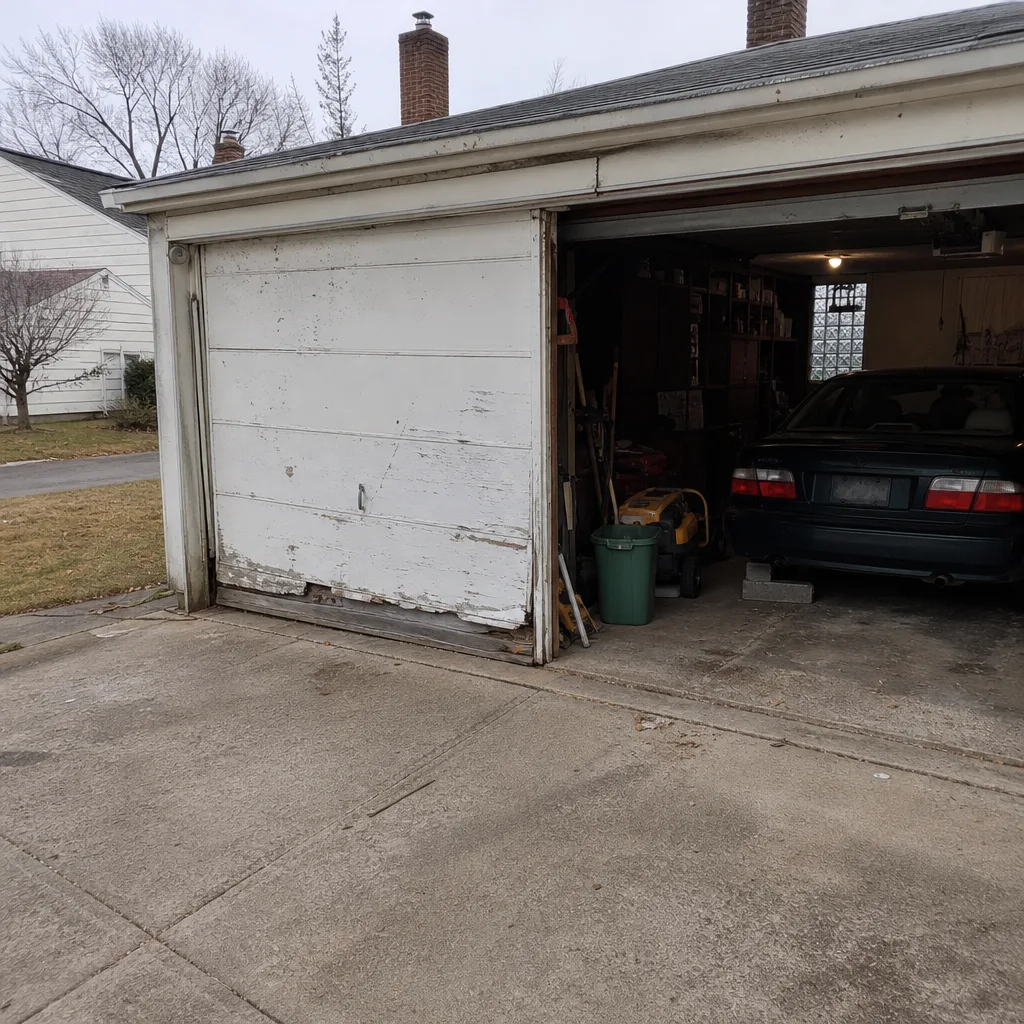 Before
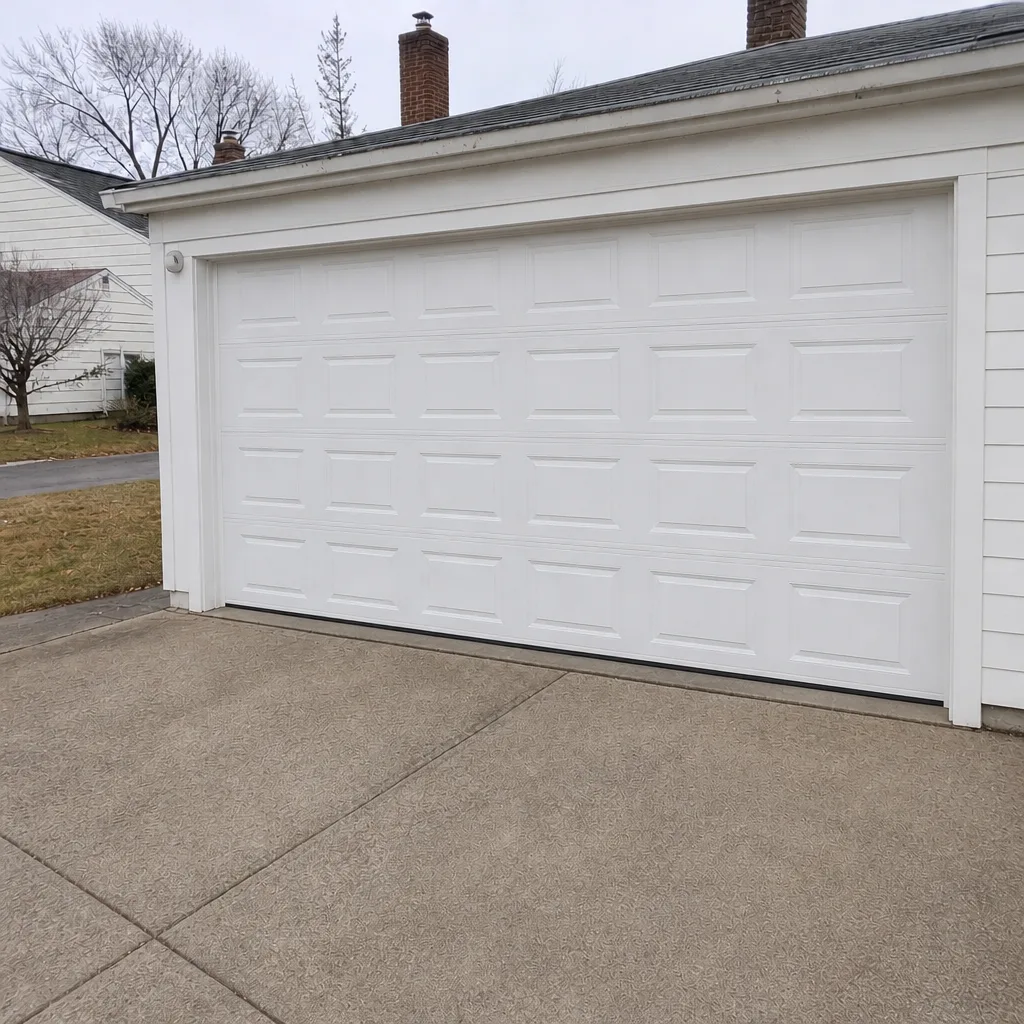 After
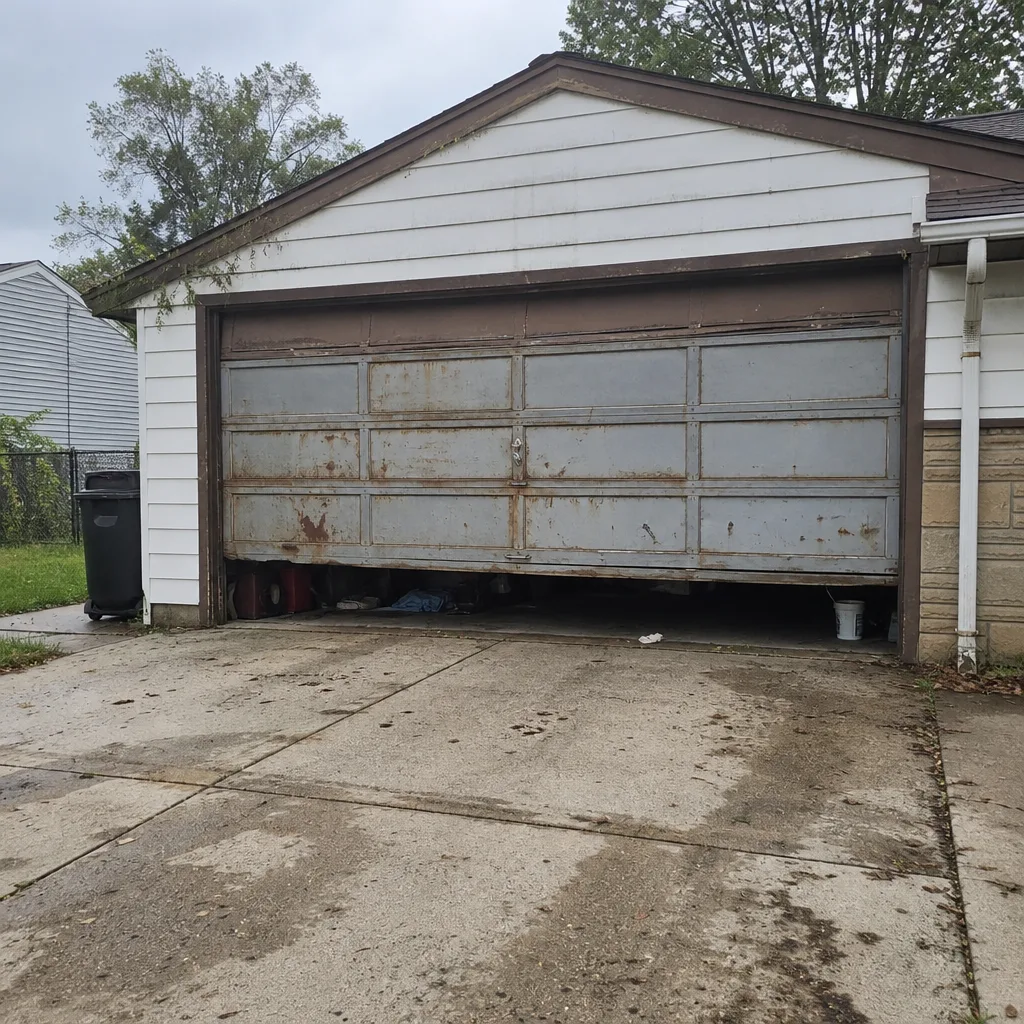 Before
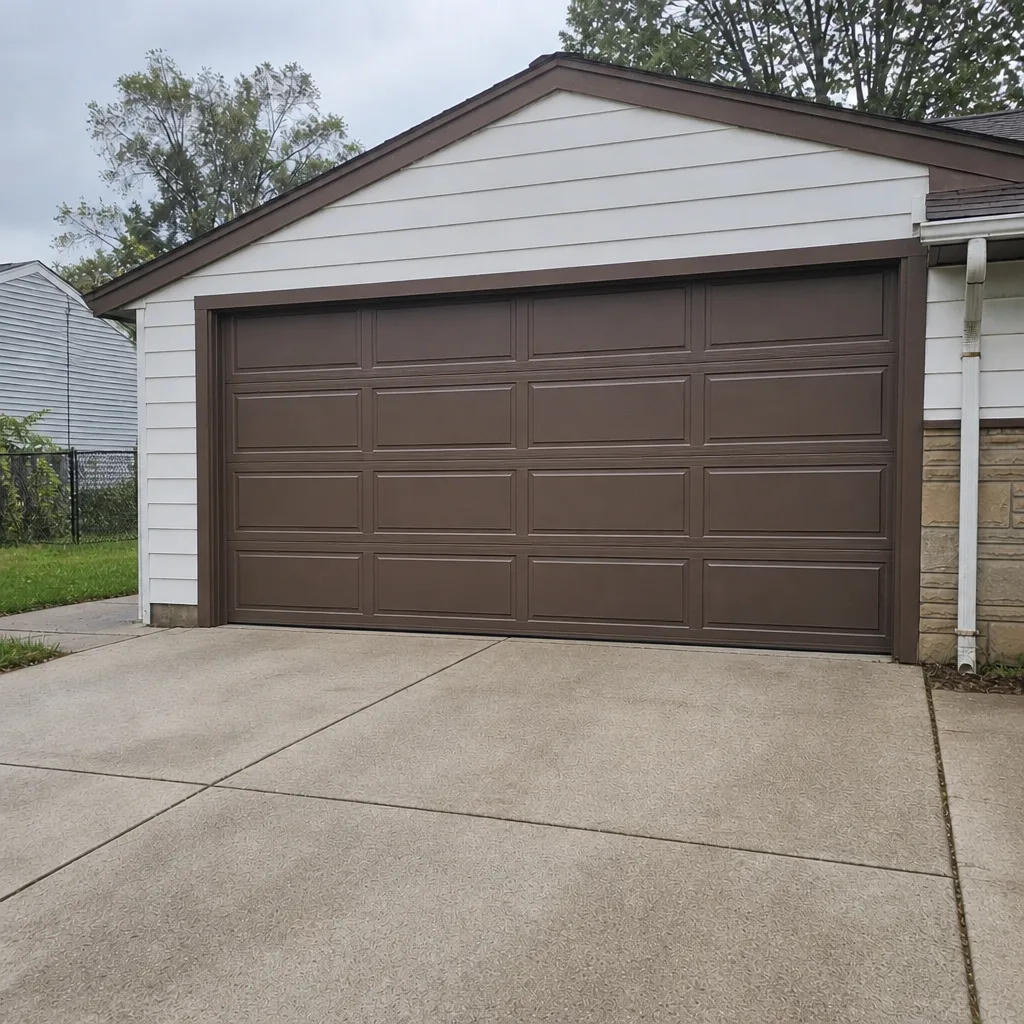 After
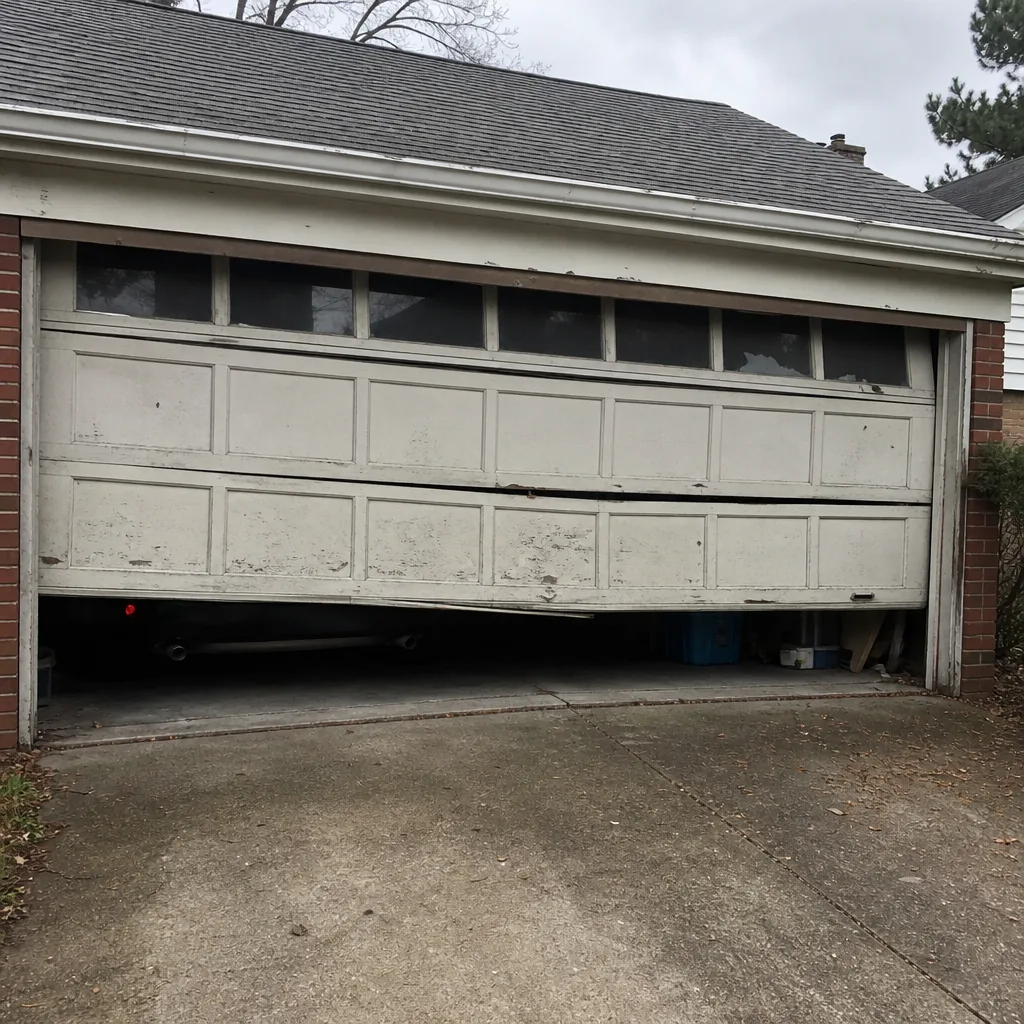 Before
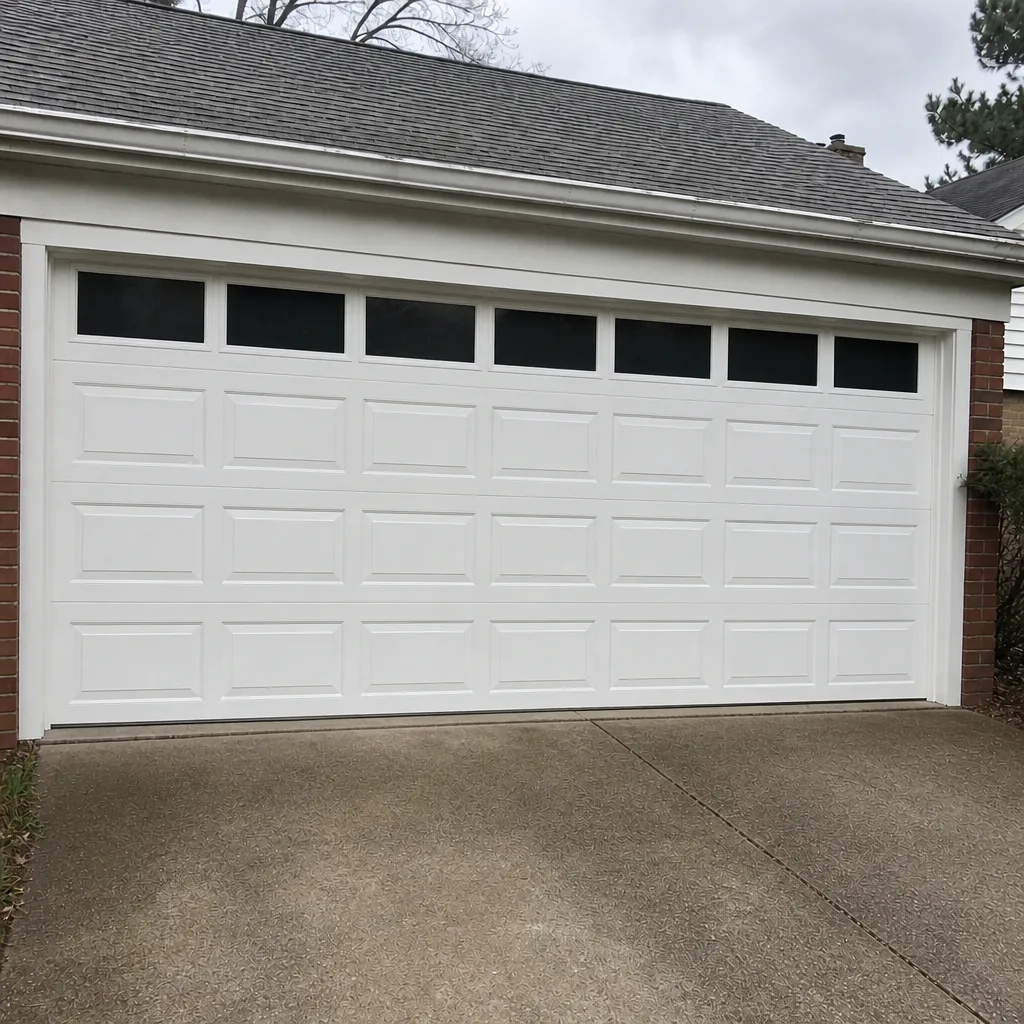 After
When to Call a Professional
Call a professional the moment your door stops behaving normally: a snap or bang from the garage, a door that feels impossibly heavy, a door hanging off its track, a cable that’s come loose, or an opener that strains or reverses on its own. Any of these can mean a spring or cable is compromised, and those are not things to test by hand. For cosmetic dents, a dead remote, or a noisy door that still works, you can schedule a normal repair. If you’re planning a new door or an opener upgrade for a mid-century Parma home, start with a free measure and a written price. Parma Garage Door Repair Pros offers free estimates in Parma, and you can reach us at (855) 658-4208. Our technicians have up to 13 years of experience, and the local pro we connect you with is licensed and insured as the state requires.
Frequently Asked Questions
Spring repair is priced per spring, and matched pairs are usually replaced together at roughly double a single spring. Because exact prices depend on your door and spring type, we give you a written estimate before any work starts, and that estimate sets the final price. Call (855) 658-4208 for an exact quote; estimates are free.
Emergency garage door service is a standing offering, and we’ll always try to get to a door that’s stuck open, stuck closed, or off its tracks as soon as we can. If it’s a day we’re closed, we’ll book you for the next available slot, including Sunday. When the door won’t move, call (855) 658-4208.
No. We quote the price and agree it with you before any work begins, and if we find something different once we open up the system, we talk to you first. You won’t get an invoice that’s bigger than the quote. Call (855) 658-4208 for a free estimate.
The local pro we connect you with is licensed and insured as the state requires, and our technicians have up to 13 years of experience. We work on your brand rather than learning it on the job, which matters most in older Parma homes running legacy equipment. Call (855) 658-4208 for a free estimate.
Sometimes, but often not exactly. Mid-century openings rarely match a nominal 16×7 size, and headroom or header height may need a low-headroom setup or a modification before a new door goes up. We measure the actual opening and quote a door that fits it, not a catalog number.
Repair wins when the door structure is sound and matching panels are still available; replacement wins when panels are discontinued, the spring system is failing across the board, or the door no longer suits the home. We’ll price both so you can compare honestly. Call (855) 658-4208 to talk it through.
The Bottom Line
Parma’s older homes reward a measured, brand-aware approach to garage doors. Size the door to the real opening, not to a catalog standard. Choose materials that survive freeze-thaw and road salt. Treat spring work as the safety job it is, and never force a door that won’t move. Work with a specialist who knows your brand, whether that’s a legacy opener or a new Clopay door. And always get a written price before work starts. From a broken spring to a brand-new door, one company can cover every step. Call Parma Garage Door Repair Pros at (855) 658-4208 for a free estimate, or explore Parma Garage Door Repair Pros to see every service we offer.
Written by the team at Parma Garage Door Repair Pros.