Last updated November 21, 2026
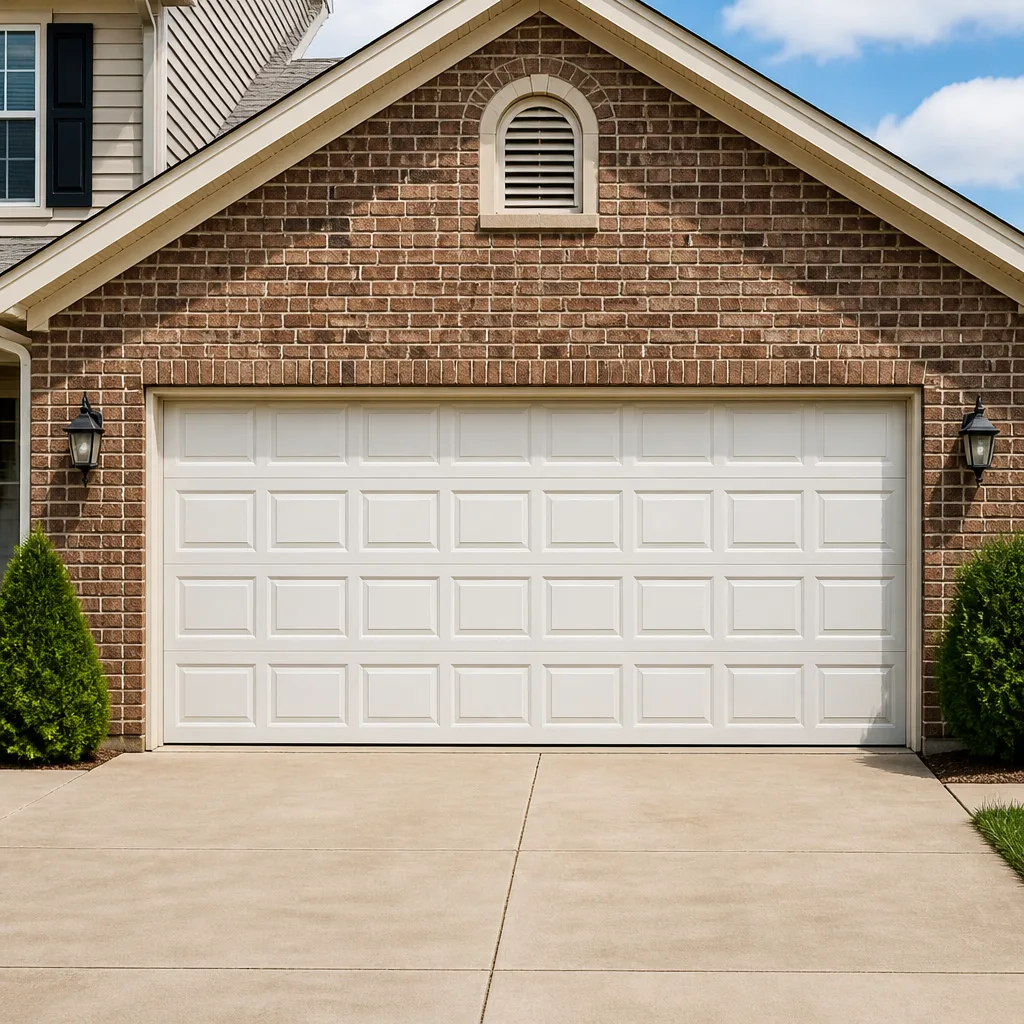 Raised-panel steel
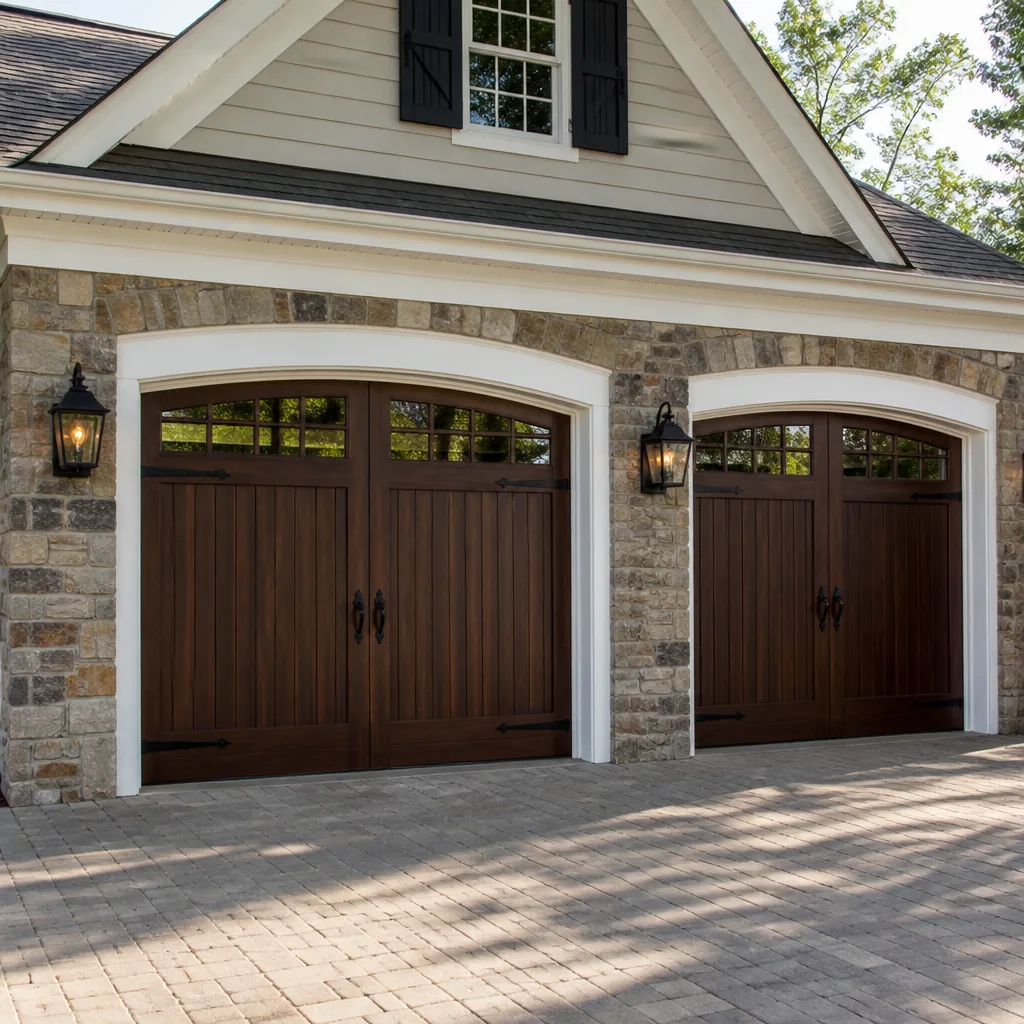 Carriage house
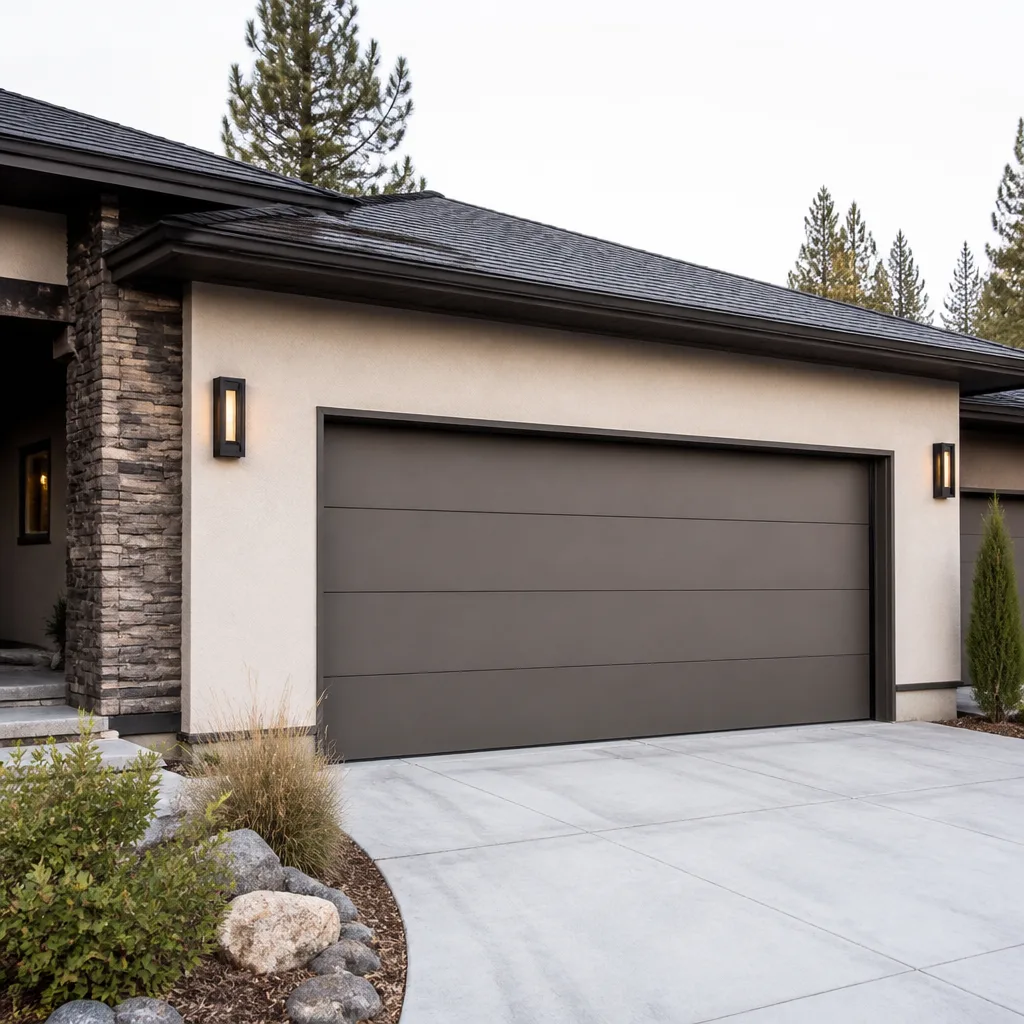 Modern flush
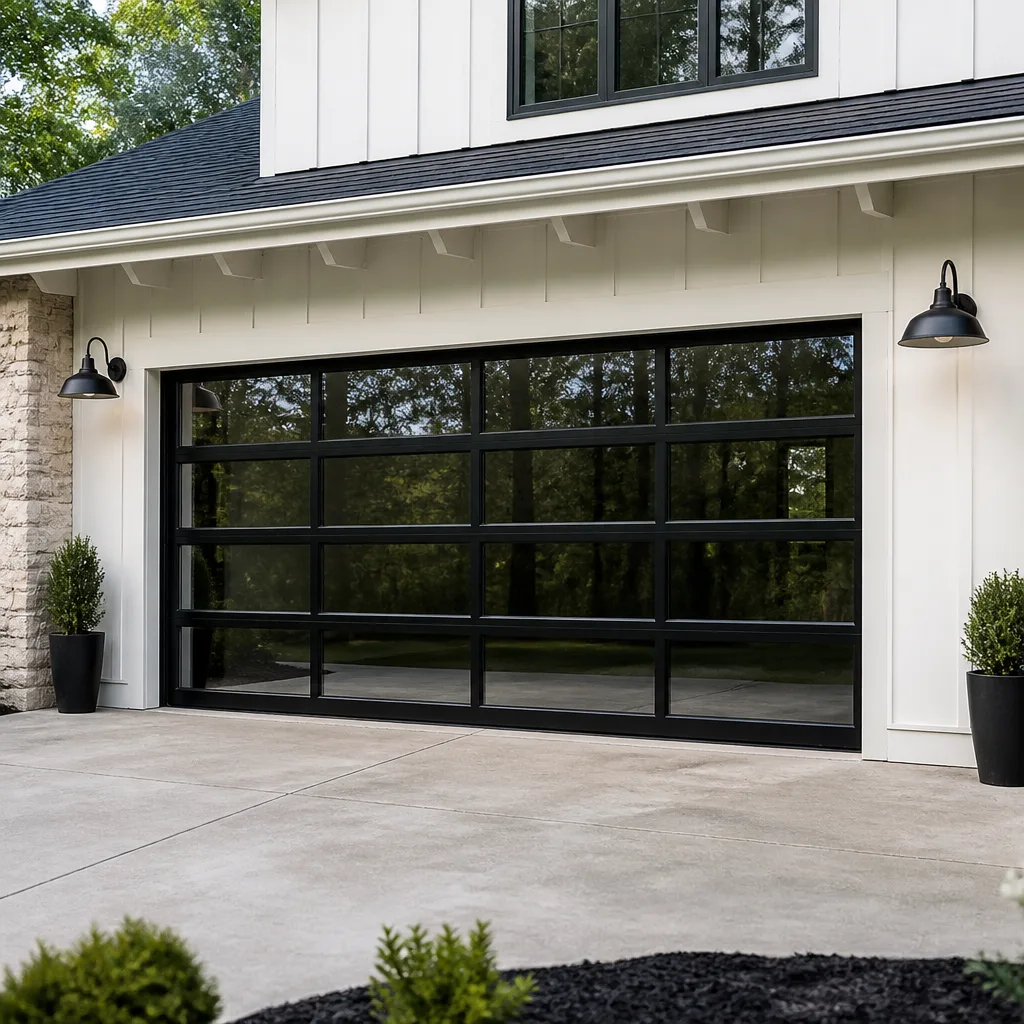 Full-view glass
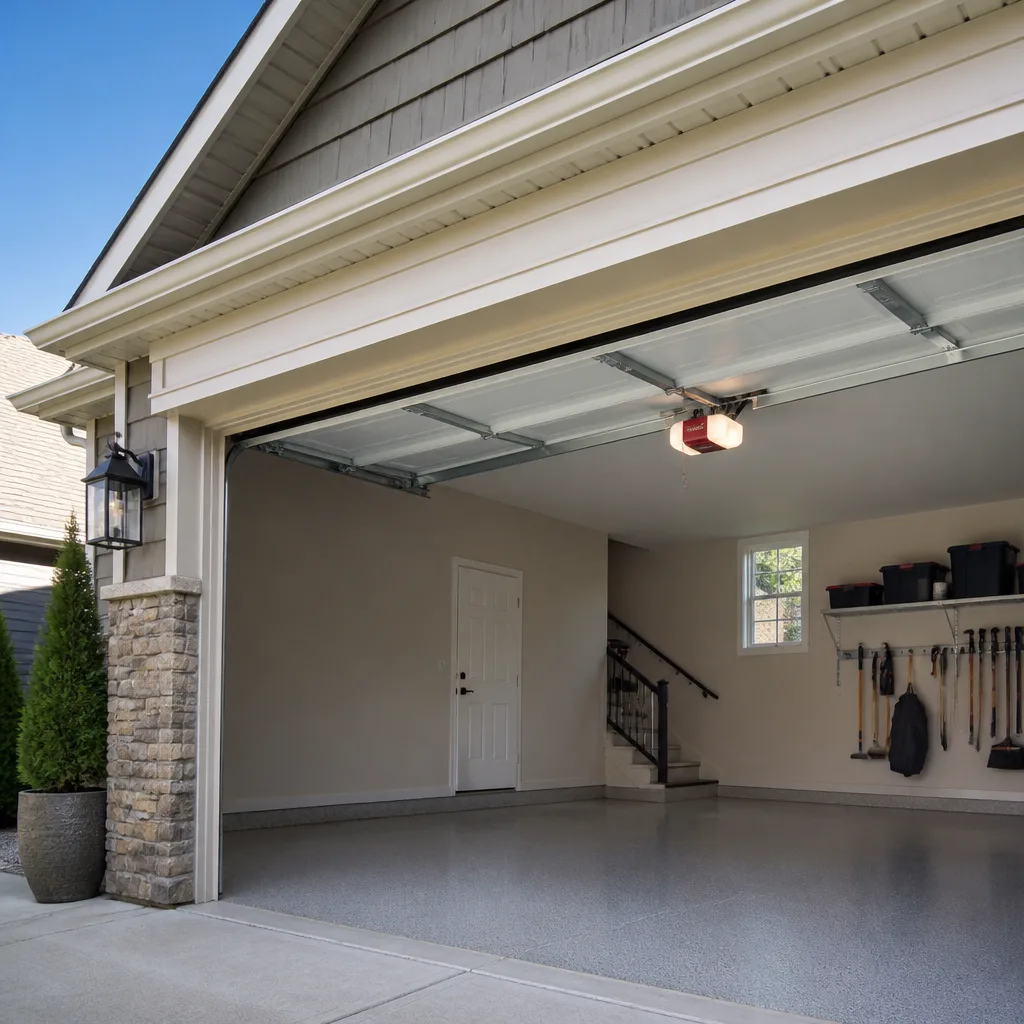 LiftMaster openers
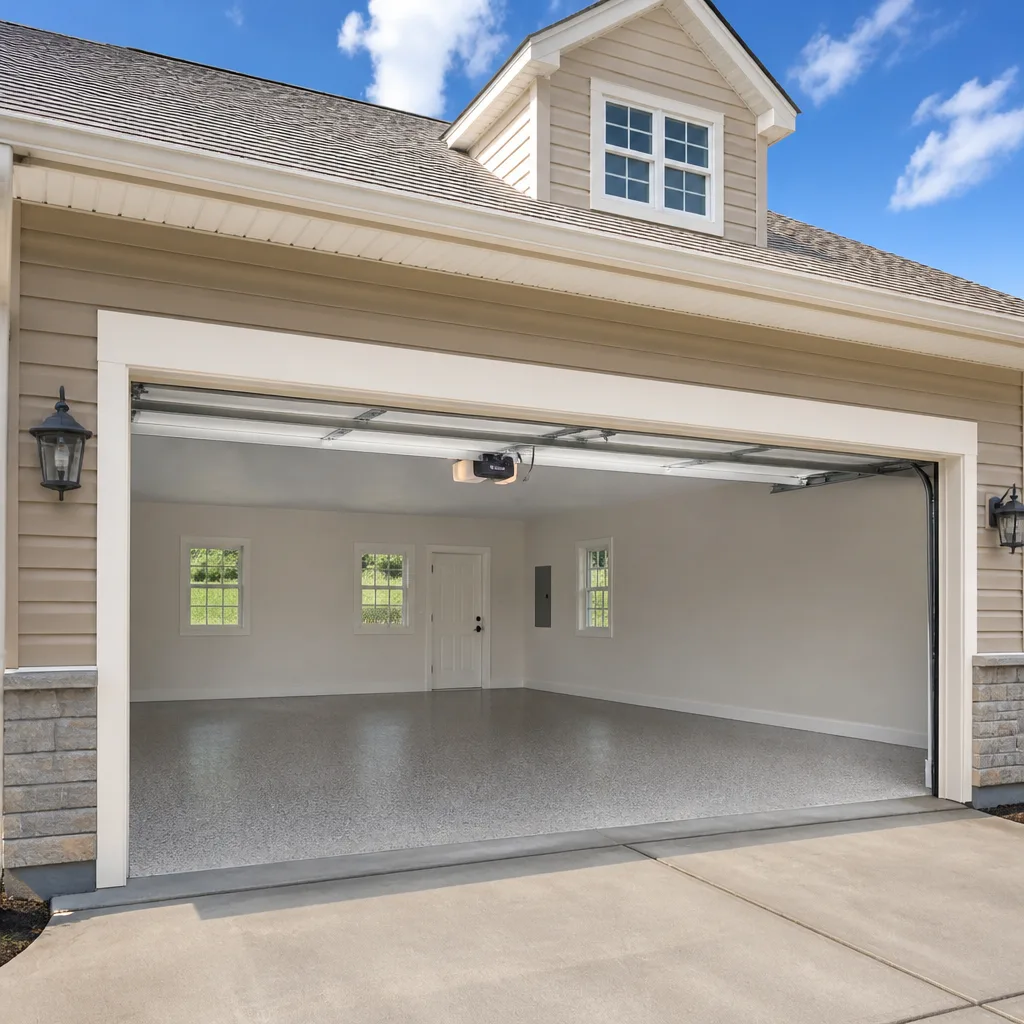 Chamberlain openers
Full 25-point door and opener safety check with every visit - springs, cables, rollers, tracks, and your LiftMaster or Chamberlain opener included
You get a price before we start. It does not change when the pro arrives.
Get your free estimateGarage Door Warning Signs: A Parma Homeowner’s Reference Guide
A garage door that hesitates for half a second before it moves isn’t “just getting old.” That pause is a signal from the spring system, and it has a repair that can be made now, before it turns into a snapped spring that traps your car inside on a morning you actually need to be somewhere. Most warning-signs lists stop at the obvious: the door is loud, the door is slow. In our experience, the symptoms Parma homeowners dismiss for the longest are the quiet, early-stage ones that point to a specific part. This guide maps each symptom to the component behind it, tells you which signs mean watch and which mean stop using the door, and shows you what to check from the ground in Parma without ever touching a spring.
Quick Answer
The early warning signs of a failing garage door are a brief hesitation before movement, a door that drifts or won’t stay half-open, grinding or popping from one side, and frayed cables at the bottom corners. Any sign tied to springs or cables means stop using the door and call a trained technician, because those parts are under extreme tension and cause the most serious garage door injuries.
Styles & brands we work with
- Raised-panel steel
- Carriage house
- Modern flush
- Full-view glass
- LiftMaster openers
- Chamberlain openers
Table of Contents
- The Symptom-to-Component Map: What Each Sign Is Telling You
- Watch-and-Wait vs. Stop Using the Door Now
- A Visual Inspection Guide You Can Do From the Ground
- How Northeast Ohio Weather Accelerates Specific Failures
- The 30-Second Balanced Door Test
- What the Sounds Are Actually Saying
- Opener Warning Signs: When It’s the Motor, Not the Door
- Repair or Replace? Reading the Door’s Overall Condition
The Symptom-to-Component Map: What Each Sign Is Telling You
Generic advice tells you the door is “struggling.” That’s not useful when you’re trying to decide whether to call someone. Here’s how we think about it: every symptom traces back to one of a handful of parts, and knowing which part narrows down both the risk and the repair. This is the map our technicians carry in their heads, and it’s the single most useful thing a Parma homeowner can learn from this guide.
- Door hesitates at the start, or lifts unevenly on one side. Spring tension is off or one spring in a pair is weakening. This is an early sign of a spring problem, and it’s the one most often ignored.
- Door drifts back down when you let go halfway. The torsion spring has lost tension or a cable has gone slack. Both are spring-and-cable issues, not door-panel issues.
- Loud bang from above the door, then the door won’t lift. A spring has broken. Stop using the door immediately; the opener is now pulling dead weight.
- Grinding or squealing that changes pitch as the door moves. Worn or dry rollers, or a bent track. Usually a repair, not an emergency.
- Door jerks, binds, or scrapes against the frame. Track misalignment or a roller that’s popped out of its bracket. Have it looked at before the door twists a panel.
- Cable fraying or a loose cable hanging at a bottom corner. A cable is failing and it holds tension. Stop using the door and call.
- Opener runs but the door doesn’t move, or reverses right away. Usually the opener’s drive gear, logic board, or safety sensor rather than the door itself.
What makes this map useful in Parma is how often the same symptom shows up on the same brand. We work on LiftMaster, Chamberlain, Genie, Clopay, Amarr, Wayne Dalton, Craftsman, and Raynor systems, and the familiarity means we’re not guessing which part a symptom points to. A grinding sound on one manufacturer’s door can mean something slightly different than the same sound on another, and knowing your brand shortens the diagnostic step. That’s the practical value of brand fluency when a door starts talking to you.
Watch-and-Wait vs. Stop Using the Door Now
This is the decision that matters most, and it’s where most lists fail you. Some warning signs are annoying but safe to live with for a few days while you book a repair. Others mean the door should not move again until a technician has looked at it, because the danger is real and it isn’t about the inconvenience of a stuck car.
Stop using the door now if you see or hear any of these:
- A loud bang followed by a door that won’t lift. A spring has broken and the opener is straining against dead weight. Using it can burn out the opener motor or tear a panel.
- A visible gap or separation in a torsion spring above the door. Never try to open the door with a broken spring.
- A frayed, kinked, or loose cable, especially where it wraps at the bottom corner or drum. Cables are under the same tension as springs.
- The door hanging crooked, off one track, or partially off its tracks. Forcing it can bring a panel down.
- A door that comes down and doesn’t reverse, or that falls faster than it should. The safety reverse has failed and the door is a hazard to anyone underneath.
Watch and schedule a repair soon if you see these:
- Rollers that squeak or grind but the door still moves evenly.
- A slightly noisy opener that otherwise opens and closes the door normally.
- A remote or wall button that works intermittently.
- Weatherstripping at the bottom that’s cracked, torn, or letting in drafts.
Spring and cable symptoms belong in the stop column every time. They’re under tension strong enough to injure a person seriously, and no homeowner should try to relieve that tension. When the door won’t move or a spring gives way, our garage door repair service is the call to make, and for failures that can’t wait, emergency garage door service is a standing part of what we do, not a reluctant exception.
A Visual Inspection Guide You Can Do From the Ground
You can catch most early failures with a two-minute walk-around, and you never need to climb a ladder or touch a moving part. Stand back from the door with it closed, then look again with it open. Here’s what to look for at each spot.
- The spring shaft above the door. With the door closed, look at the torsion spring (the coil on the horizontal bar). Check for a visible gap or two separated coils. That gap means a broken spring.
- The cable drums at the corners of the shaft. Cables should wrap cleanly. Look for strands sticking out, kinks, or a cable that’s jumped its groove.
- The bottom corners of the door. Look where the cables attach at the bottom brackets. Fraying here is common and it’s a sign of cable wear before failure.
- The track brackets along the sides. Brackets should be tight and the track should look straight. A bracket that’s bent, loose, or pulling away from the wall suggests track movement.
- The rollers inside the track. Any roller that looks cracked, flat-spotted, or popped partly out of the hinge means it needs replacing.
- The panels and the bottom seal. Check for dents, cracks, or a seal that’s flattened and no longer touching the floor.
Do this check with the door fully closed. If you find a broken spring, a frayed cable, or a door hanging crooked, don’t cycle the door to test it further. Call a technician and leave it where it is. The inspection is meant to catch problems early, not to give you permission to work on the dangerous parts yourself.
How Northeast Ohio Weather Accelerates Specific Failures
Parma sits in a climate that’s hard on garage doors in a specific way. Long, cold winters with repeated freeze-and-thaw cycles, plus humid summers, put a steady strain on the metal parts that move. Those cycles matter because they work on the same components every single season. Doors in drier climates can go longer before the same parts show wear, and that’s why a Parma homeowner may notice cable fraying earlier than a relative in a warmer state would on an identical door.
Here’s how the local weather maps to specific failure modes:
- Cable fraying and rust. Repeated temperature swings and the moisture that comes with them promote rust on bare steel cables. Rust pits the surface, and a pitted cable frays faster under tension. That’s a Parma-specific reason to look at your bottom corners more often than a general guide suggests.
- Spring fatigue. Cold stiffens the metal and cycling the door in cold weather works the spring harder. The hesitation-before-lift symptom tends to show up in the colder months as a spring approaches the end of its tension.
- Track and bracket movement. Freeze-thaw cycles shift the ground and the structure slightly, and that can loosen track brackets over a season. A door that suddenly scrapes on one side often has a bracket that’s drifted, not a bent panel.
- Bottom seal and weatherstripping wear. A seal that takes a beating from ice and repeated compression fails fast, letting cold air and moisture in around the bottom of the door.
- Roller and hinge wear. The grit and moisture of a Northeast Ohio winter shorten roller life. Noisy, dry rollers are the most common seasonal complaint we hear.
None of this means every Parma door is on the edge of failure. It means the local climate gives certain parts a shorter working life, so the same warning sign deserves a closer look here. If you’re listening to your door through a Parma winter and the noise is new, that’s worth a quick inspection.
The 30-Second Balanced Door Test
If you can safely operate your door by hand, a quick balance test tells you a lot about the spring system in about 30 seconds, and you never touch the springs to do it. This test is about the door’s behavior, not the parts above it. Try it only if the door is currently working normally, with no broken spring and no frayed cable.
- Open the door partway and stop. Disconnect the opener using the manual release cord so you’re moving the door by hand. Pull the cord when the door is closed and the opener is off.
- Lift the door to about halfway and let go. A balanced door should stay put at the halfway point on its own.
- Interpret what happens. If the door drifts down on its own, the springs have lost tension. If it wants to rise on its own, the springs are too tight. If it stays put, the springs are doing their job.
- Lower the door slowly and re-engage the opener. Never leave the manual release disengaged for normal use.
What this test tells you is whether the springs are holding the door’s weight evenly. A door that won’t stay up is telling you the springs are tired, and that’s a repair that should happen before the spring breaks and the door stops working entirely. If the door won’t stay halfway, don’t keep testing it. Book a technician, because the springs are already telling you they’re near the end of their tension. That’s the moment to look at our garage door repair options before a broken spring traps the car.
What the Sounds Are Actually Saying
Sound is the earliest warning most doors give, and homeowners learn to tune it out. Each sound points to a different part, and a few are worth taking seriously the first time you hear them. Here’s how we translate the noise.
- A single loud bang from above. A torsion spring just broke. Stop using the door.
- Grinding that grows with movement. Dry or worn rollers, or a track that’s out of alignment. Usually fixable without an emergency.
- Popping or snapping from one side as the door moves. A fraying or slipping cable, or a roller catching. Frayed cables belong in the stop column.
- Squealing from the opener housing. A worn drive gear or a motor under strain. That’s an opener problem, not a door problem.
- A repetitive clicking near the opener’s light. The opener’s safety sensors or logic board are acting up.
- Creaking that’s louder in cold weather. Metal and wood contracting, often paired with a seal that’s lost flexibility. Usually harmless, but worth checking the rollers and hardware.
The pattern to remember: sounds from above the door (springs) are the ones to stop for. Sounds from the sides (rollers, cables, track) need an inspection and often a repair. Sounds from the opener unit itself point to a motor or control issue. That’s why opener repair is its own line of work for us, covering LiftMaster, Chamberlain, Genie, and Craftsman and the smart or Wi-Fi units built on those platforms. A noisy door and a noisy opener are two different calls.
Opener Warning Signs: When It’s the Motor, Not the Door
Not every garage door problem is in the door. When the opener is at fault, the symptoms look different, and treating them as a door problem leads you down the wrong repair. Here’s how to tell them apart.
- The opener runs but the door doesn’t move. A stripped drive gear or a broken belt or chain. The motor is fine; the drive isn’t.
- The door reverses immediately after touching the floor. The travel limits or the safety sensors need adjusting, or the sensors are misaligned.
- The remote works only up close, or not at all. Dead batteries, a blocked antenna, or a logic board issue. On modern smart units it can also be a Wi-Fi or pairing problem.
- The opener’s light flashes in a pattern. Many openers use a flash code to report a fault. It’s worth noting the pattern before you call, because it speeds up diagnosis.
- The opener strains or sounds overloaded. It may be lifting a door with a failing spring, which is hard on the motor. That can turn an opener repair into a spring repair too.
Because we work on the leading opener brands, including the smart and Wi-Fi-enabled models, diagnosing a control-board fault on a LiftMaster or Genie unit is a familiar job, not a learning curve. Our garage door opener repair service handles the motor side, and we’ll tell you plainly whether the opener, the door, or both are causing your symptom. That honest split is the difference between a repair and replacing the wrong part.
Repair or Replace? Reading the Door’s Overall Condition
Sometimes the warning signs add up to a door that’s past repairing economically, and knowing when that’s the case saves you from pouring money into a door that will keep failing. The decision usually comes down to a few signals, and we’d rather explain them than oversell a replacement.
The signs a repair stops making sense:
- Multiple panels are dented, cracked, or rusted through. Patching one spot rarely fixes a door that’s failing in several places.
- The door is out of balance repeatedly, even after spring repair. A door that keeps losing balance can point to a structural problem the door itself can’t hold.
- The panels are warped or the door no longer seals at the bottom or sides. A warped door lets in the cold and defeats the point of the door.
- You’ve replaced the same parts more than once in a short span. Repeated failures on the same component usually point to a deeper problem in the door.
- The opener and door are both old and both failing. At that point a new door and opener installed together is often the cleaner path.
If a replacement is the answer, that’s a scheduled project, not a same-day fix. It’s measured, ordered, and installed by appointment. The brands we install include Amarr, Wayne Dalton, and Raynor alongside the others we service, so we can match a door to your home and your budget rather than steering you to whatever’s on hand. Our garage door installation team walks you through the options and gives you a written price before anything is ordered. From a broken spring to a brand-new door, it’s the same company handling the whole arc.
Common Mistakes to Avoid
- Ignoring the half-second hesitation. A door that pauses before it lifts is warning you about spring tension. Waiting until the spring breaks turns a repair into an emergency. In Parma winters, that hesitation tends to show up right when you need the door most.
- Trying to fix a spring or cable yourself. These parts store enormous energy. A generalist handyman or a DIY kit can cause a serious injury. Spring work is a safety job and belongs to a trained technician.
- Forcing a door that’s off its track or crooked. Running a crooked door bends panels and can bring the door down. Stop and call.
- Spraying lubricant on a failing part and calling it fixed. Lubrication helps rollers and hinges, but it doesn’t restore spring tension or repair a frayed cable. It only hides the symptom until failure.
- Blaming the opener for a door problem. A strained opener often gets replaced when the springs were the real issue. Diagnose the door and the opener separately.
- Skipping the seasonal walk-around. A two-minute visual check each season catches frayed cables, loose brackets, and worn seals before they turn into a no-start morning. Parma’s freeze-thaw cycles make that check more important, not less.
- Hiring whoever answers the phone for spring work. A broken spring and a noisy opener are different jobs. A specialist who knows your door’s brand will diagnose it faster and repair the right part.
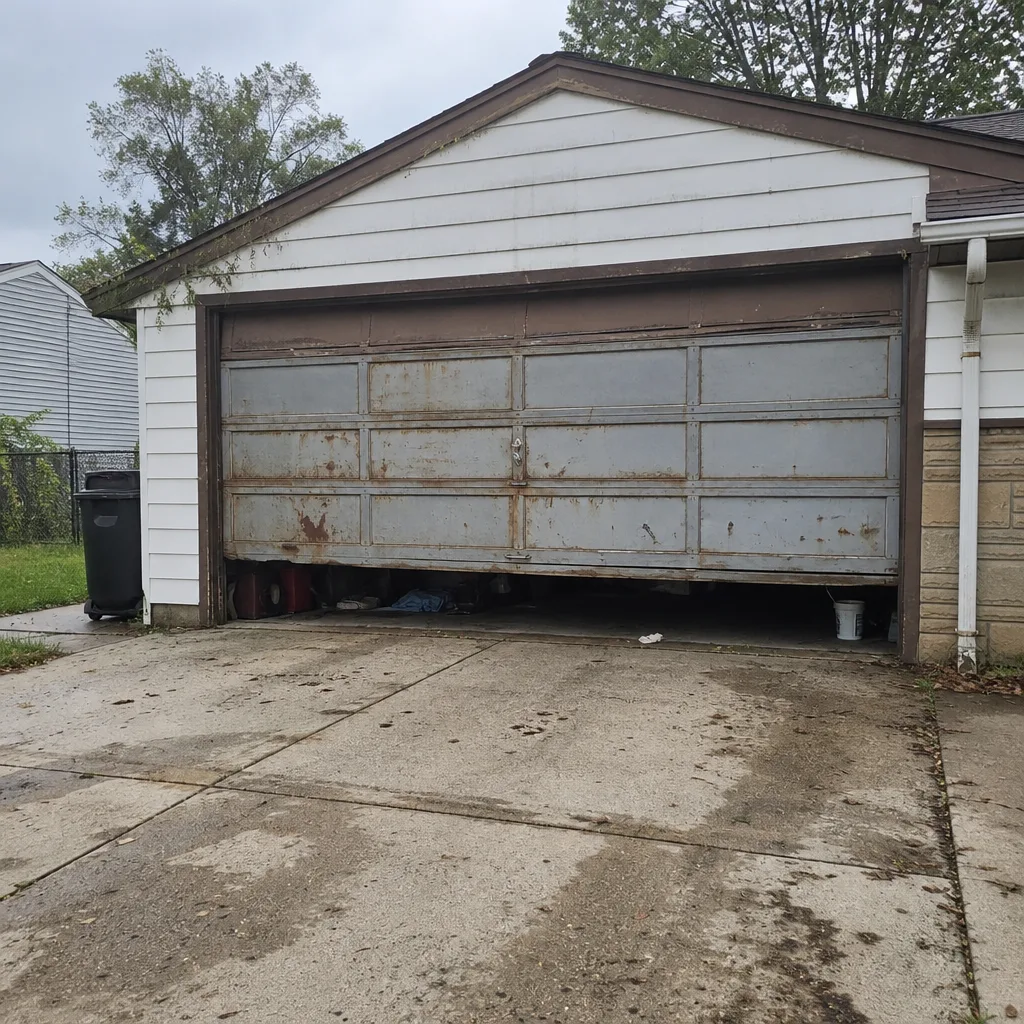
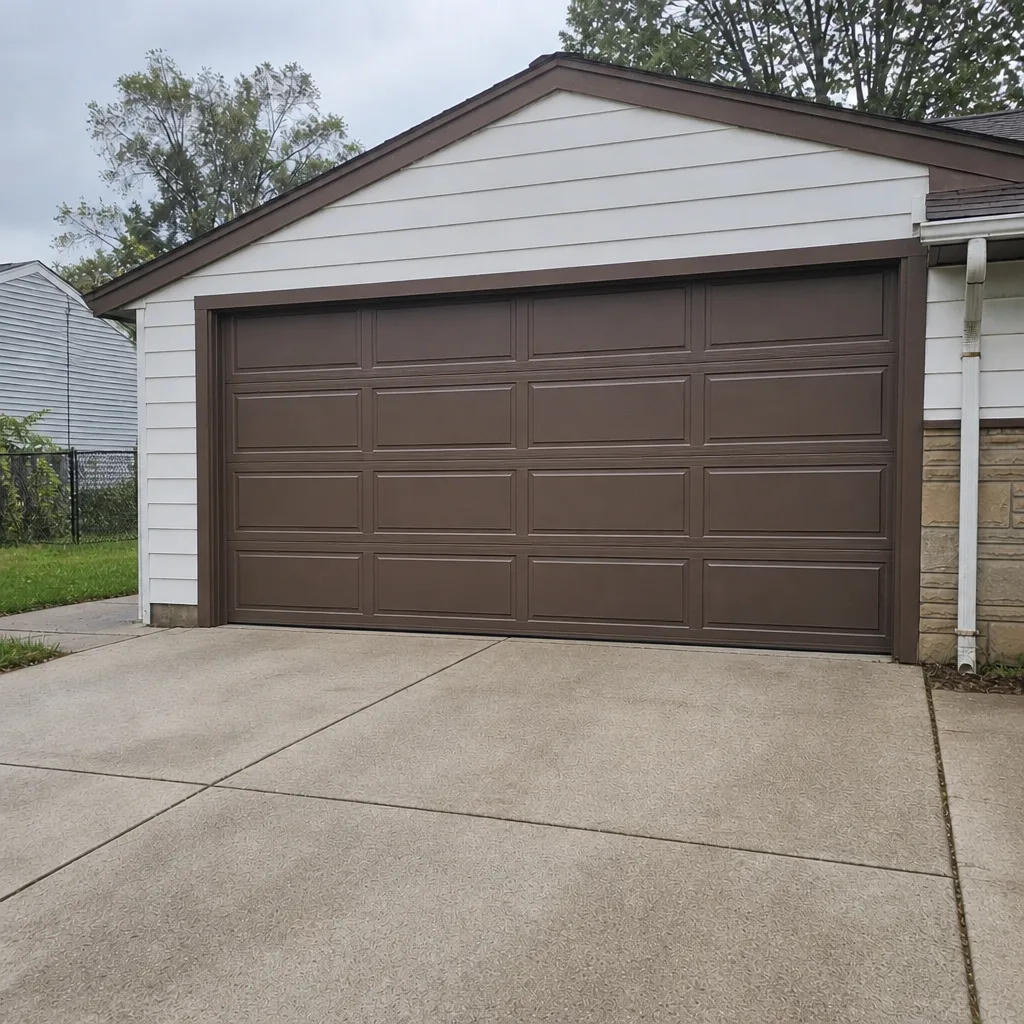
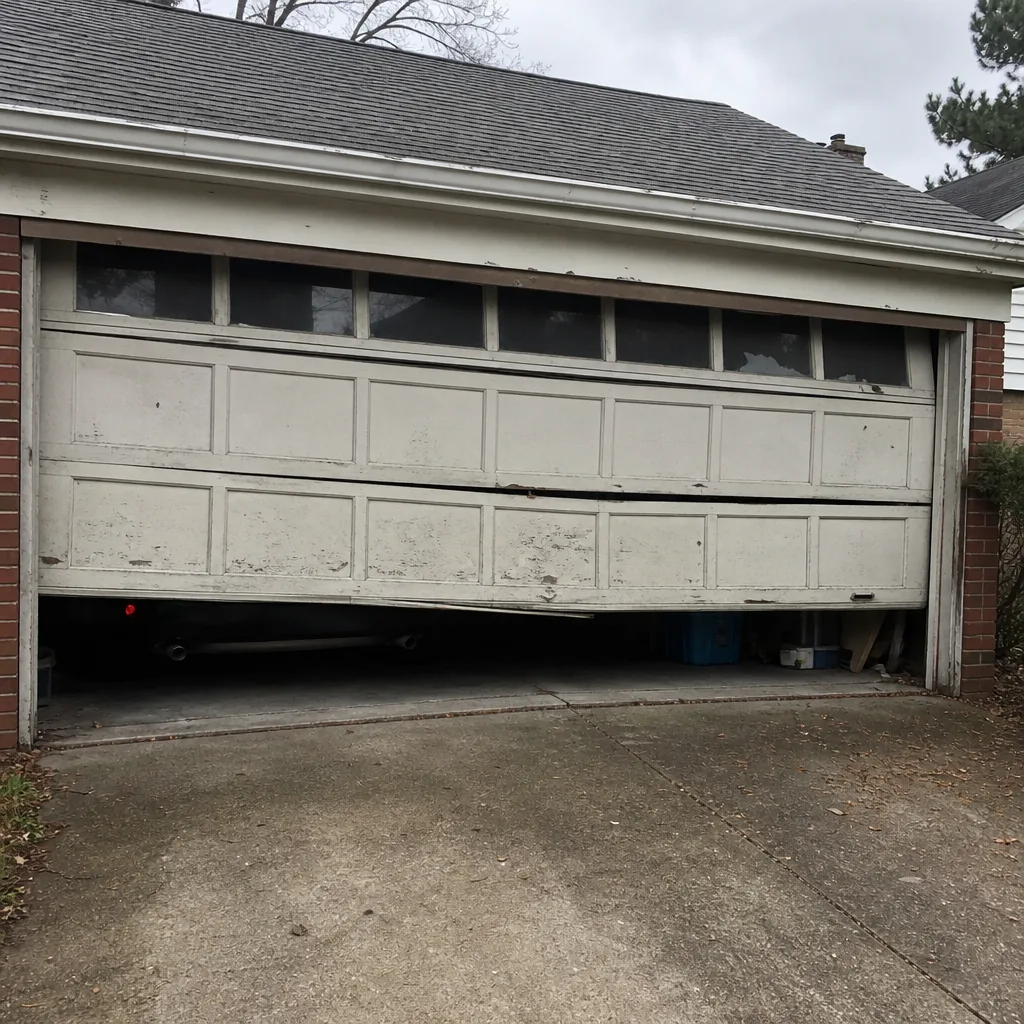
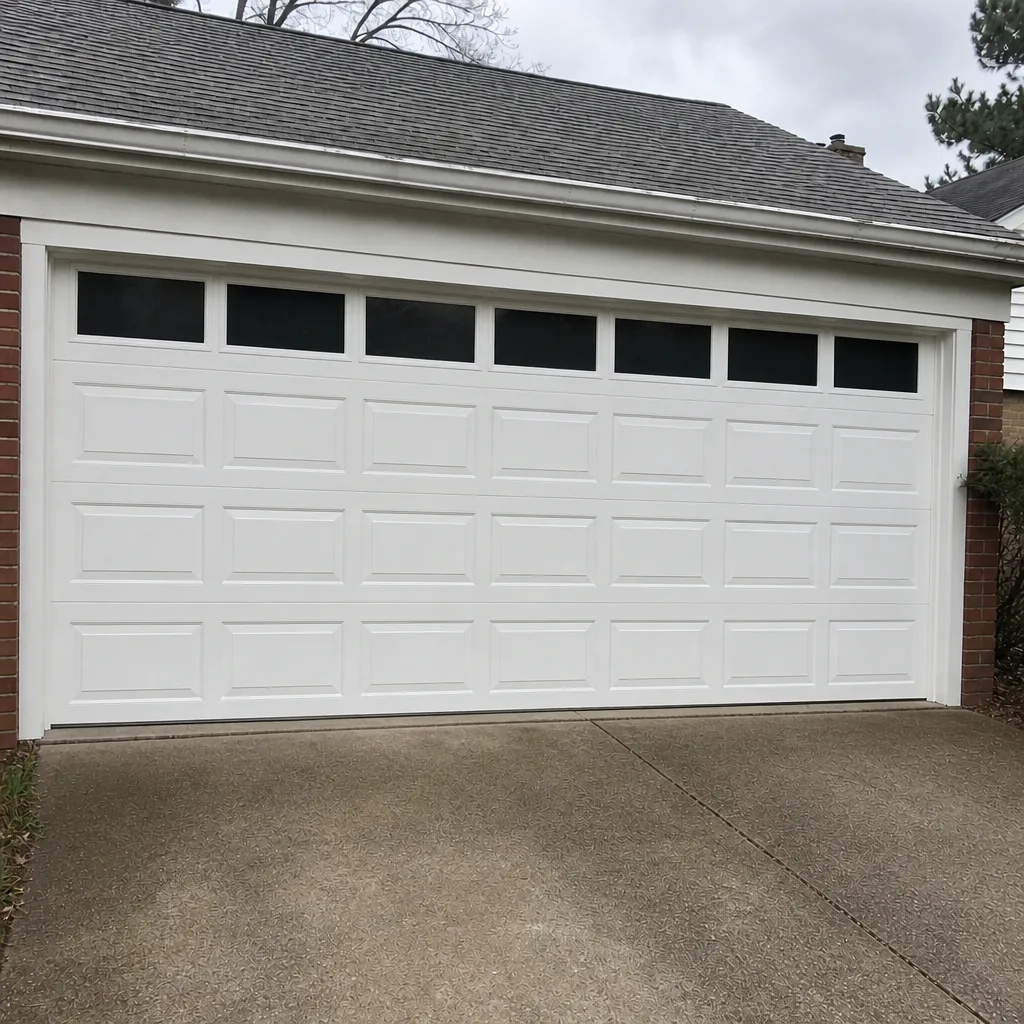
See the difference
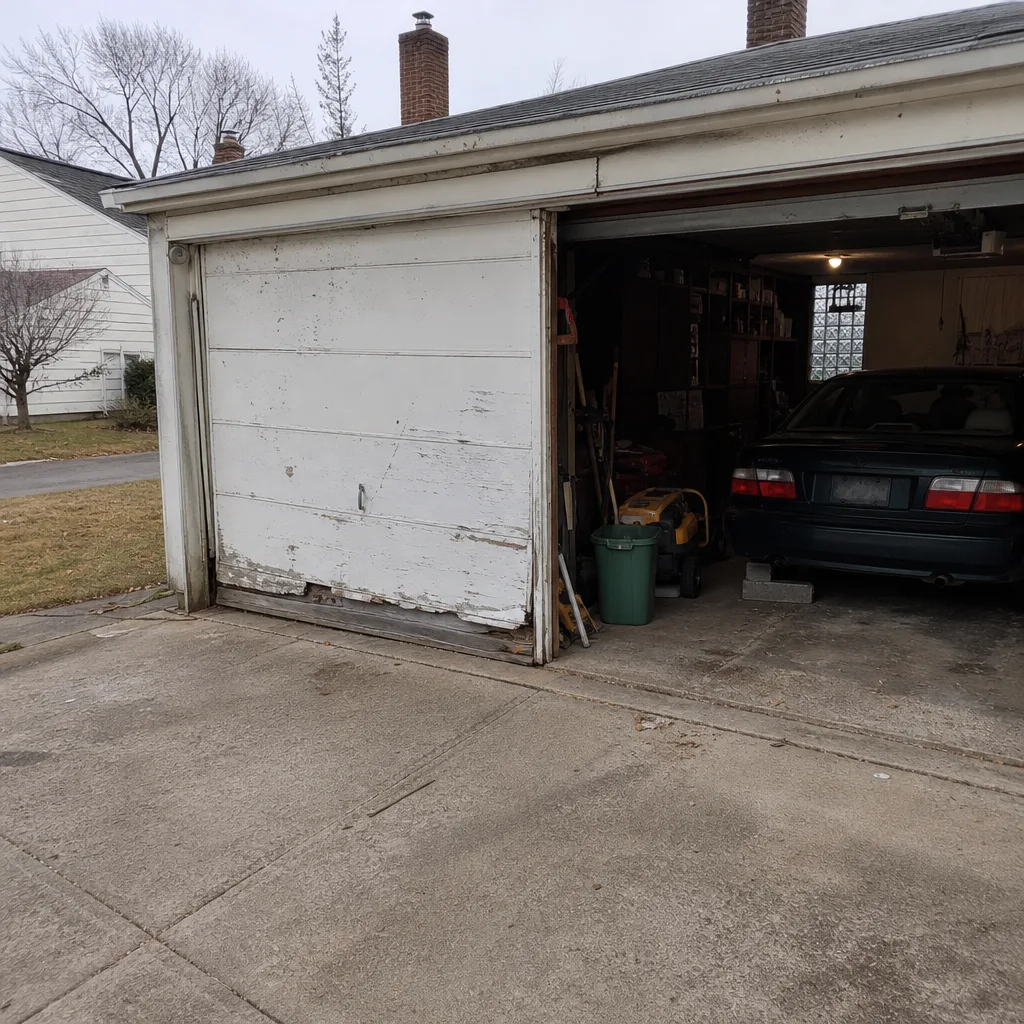 Before
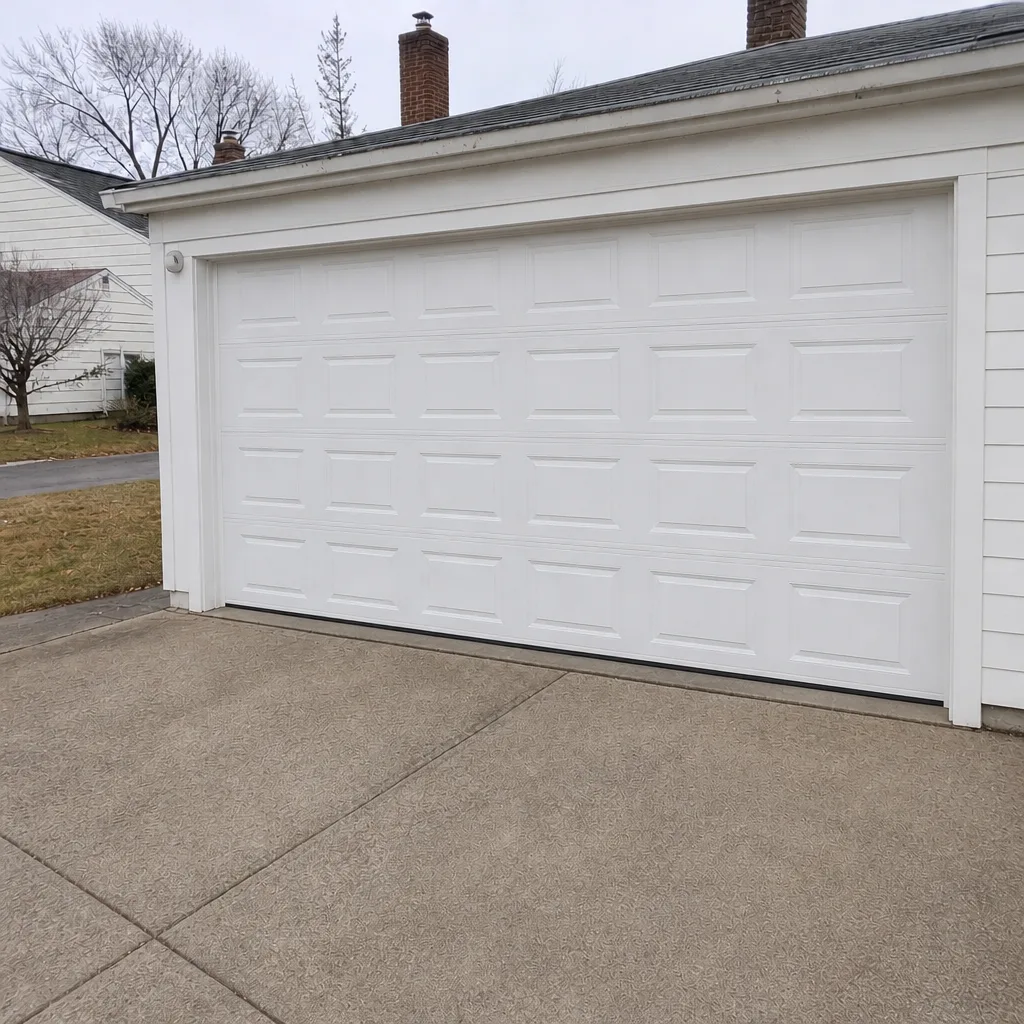 After
 Before
 After
 Before
 After
When to Call a Professional
Call a professional the moment you see a broken spring, a frayed or loose cable, or a door hanging crooked or off its track. Stop using the door and leave it alone. These are the symptoms that create injury risk, and they’re not work for a ladder and a YouTube video. Call when the door hesitates, drifts, or won’t stay halfway, because that’s a spring that’s failing and can be repaired before it breaks. Call when the door reverses or won’t close, because that’s a safety issue for anyone under it. And call when the noise or the symptoms point to an opener problem you can’t pin down.
Spring repair and emergency service are core parts of what we do, and our technicians have up to 13 years of experience on the systems homeowners actually own. Parma Garage Door Repair Pros offers free estimates in Parma. Call (855) 658-4208 to get a trained eye on your door and a written price before any work starts.
Frequently Asked Questions
The first sign is usually a brief hesitation before the door moves, or a door that won’t stay halfway open when you test it by hand. That drift-back means the spring has lost tension. Don’t keep cycling it. Call (855) 658-4208 for an exact quote; estimates are free.
No. A door with a broken spring should not be operated by hand or by the opener. The door is very heavy without spring tension, and forcing it can injure you or damage the door. Leave it down and call a technician, or use the manual release only under a technician’s guidance.
It depends on the spring type and whether one spring or a matched pair is being replaced, so the written estimate you get is the number that counts. A single-spring replacement is the base cost, and a matched pair runs about double that because both are replaced together. Call (855) 658-4208 for an exact quote; estimates are free.
Cables fray because of age, moisture, and the constant cycling of the door, and this climate’s freeze-thaw cycles and humidity speed up rust that weakens the cable strands. A fraying cable is under tension, so stop using the door and have it replaced by a technician rather than trying to handle it yourself.
A loud bang from above the door followed by the door not lifting almost always means a torsion spring broke. Stop using the door, because the opener is now trying to lift dead weight, which can burn out the motor or damage a panel. Call (855) 658-4208 to book spring repair.
Repair when the problem is a specific part: a spring, cable, roller, or opener component. Replace when multiple panels are failing, the door keeps losing balance after repair, or the door and opener are both old and both failing. A new door is a scheduled project with a free measure and a written price, not a same-day fix.
The Bottom Line
The early signs are the ones worth acting on: a hesitation before the door lifts, a door that drifts instead of staying put, a grinding sound that changes pitch, a frayed cable at the bottom corner. Each one points to a specific part, and the spring-and-cable signs belong in the stop-using-the-door column every time. A two-minute walk-around each season and the 30-second balance test catch most of them before they become an emergency. When you’re ready to have a technician look, whether the door is hesitating or you’re weighing a full replacement, Parma Garage Door Repair Pros is a specialist across the whole lifecycle. Call (855) 658-4208 for a free estimate.
For everything from a spring repair today to a new door down the line, Parma Garage Door Repair Pros connects Parma homeowners with trained local technicians who know their brand, quote the price before work starts, and handle the whole job from first look to final test. Whether your system is a LiftMaster, Chamberlain, Genie, Clopay, Amarr, Wayne Dalton, Craftsman, or Raynor, it’s a system we know.
Written by the team at Parma Garage Door Repair Pros.